
Seacrest Beach sits right next door to Rosemary Beach, so buyers are often surprised by how differently the two communities price. When clients ask me about Seacrest Beach vs. Rosemary Beach, the real question underneath is usually simpler: am I paying for the Rosemary name, or am I getting something Seacrest cannot match? The short answer is that you are paying for design, brand, and beach access, in that order. Here is the honest breakdown I give my own clients.
Seacrest Beach vs. Rosemary Beach: What Actually Separates Them
Seacrest Beach and Rosemary Beach are neighboring East End communities on 30A, but they serve different buyers. Rosemary Beach is a master-planned, architecturally controlled luxury village with multiple deeded beach accesses and four community pools. Seacrest Beach offers a more accessible price, a 300-plus-home neighborhood, and the largest lagoon pool on 30A, paired with limited deeded beach access.
Both communities share the same sugar-white sand and the same emerald water. They sit within a short walk or bike ride of each other. But the experience of owning in each one, and the check you write to do it, are not close. If you are still getting oriented to this part of the coast, start with our complete guide to 30A and then come back here for the head-to-head.
The Core Difference: Brand and Design
Rosemary Beach is a fully master-planned town. Every facade, color, roofline, and streetscape is governed by a strict pattern book and a town architect, and that control is the entire point. It protects the look of the place, and over time it protects value. The 107-acre town is built around a real walkable center with the Pearl Hotel, Havana Beach Bar and Grill, Pescado, and a tight cluster of shops and restaurants. You can park your car and not touch it for a week.
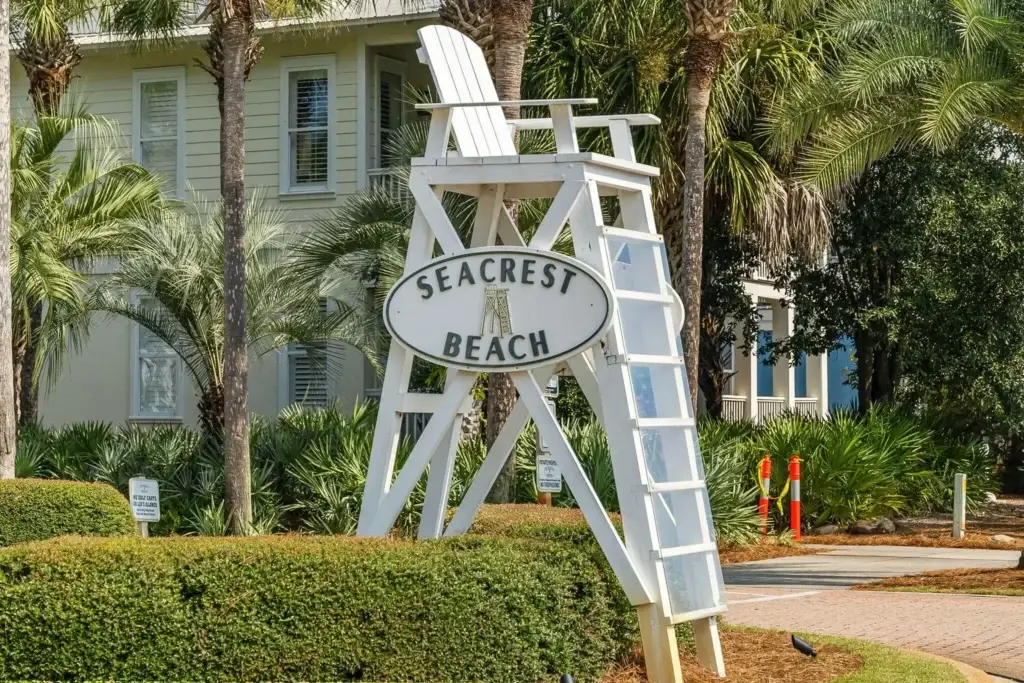
Seacrest Beach has a small town center too, but it is not on the same scale, and it was never designed to be. Established in 1996, Seacrest is a 300-plus-home neighborhood of pastel cottages, condos, and newer estate homes along brick-paver streets. It is relaxed and family-first rather than curated and architectural. Neither approach is wrong. They simply attract different owners. Buyers weighing the top of the luxury tier often look at how Rosemary stacks up against Alys Beach as well, and the value-versus-brand question shows up again when you put Inlet Beach against Rosemary Beach.
Beach Access: The Trade-Off Most Buyers Miss
This is the part most buyers overlook, and it is the single most important thing I tell clients about Seacrest.
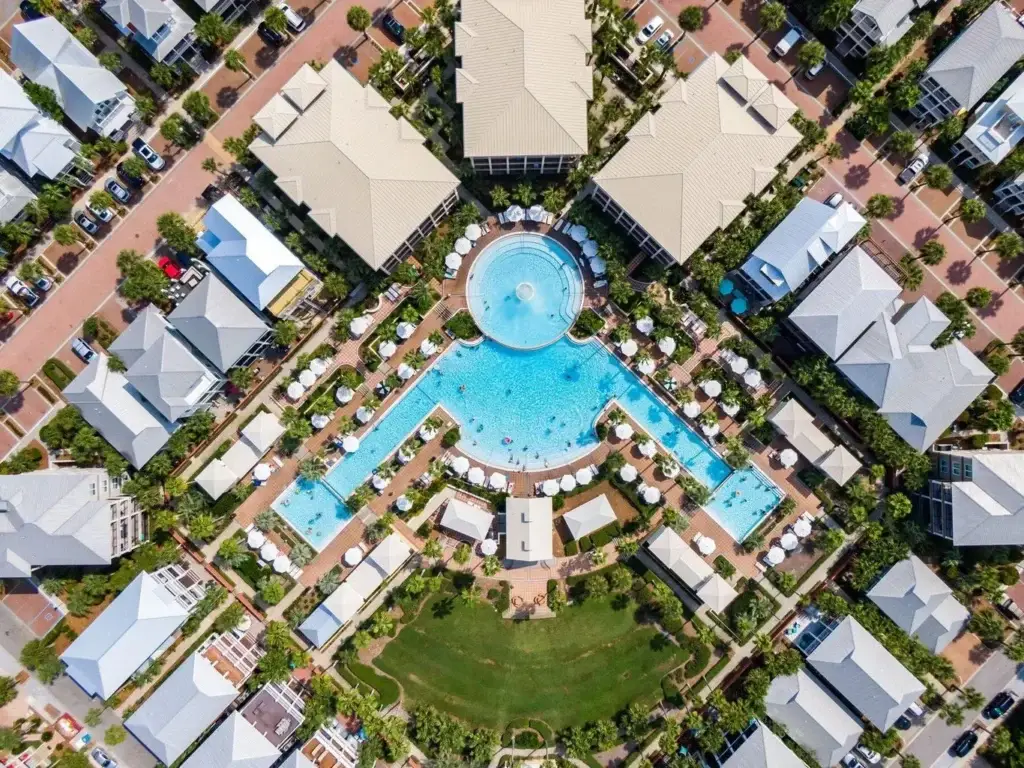
Seacrest Beach does have deeded beach access. The catch is that it is small relative to the 300-plus homes in the community, which is exactly why the developer built the massive lagoon pool. A seasonal tram shuttles owners and guests to the sand, and during peak weeks that access point gets busy. The lagoon pool is a genuine amenity, and for a lot of families it is the center of the vacation. But you should understand the design logic behind it before you buy.
Rosemary Beach is built differently. It has multiple deeded beach access points spread through the town, plus four community pools woven into the neighborhoods. The ratio of access to homes is simply easier. If you plan to spend most of your days on the beach, that matters. If you are happy basing your day around a great pool, Seacrest works and saves you a significant amount of money. It is worth understanding how public and private beach access works on 30A before you commit either way, and it is the same conversation I have with buyers looking at Alys Beach next door.
The Lagoon Pool and Seacrest’s Amenities
The Seacrest lagoon pool is the largest on 30A at roughly 12,000 square feet and 378,000 gallons, heated naturally by the sun, with a waterfall, fountain, and a grassy amphitheater alongside it for concerts and events. Add 1.35 miles of shaded walking trails, the seasonal tram, and you have a community built around shared amenities rather than private beachfront.
One practical note for owners and anyone planning to rent: Seacrest runs an amenity system of wristbands and parking passes managed by the Seacrest Beach HOA. Guests check in to receive wristbands for the pool, tram, and beach access, and renter vehicles need a parking pass. It is smooth once you know the routine, but it shapes the arrival experience for your guests, so factor it into how you set expectations.
Rosemary Beach: What the Premium Buys
Note: Due to the new Rosemary content restrictions, I have not included photos of Rosemary.
When you pay the Rosemary premium, you are buying design pedigree, a true walkable village, four community pools, easier beach access, and a brand that carries weight with renters and resale buyers alike. For a deeper look at the day-to-day reality, costs, and rules, read our full guide to living in Rosemary Beach.
The honest cons are real too. Parking is tight during peak season because the alley-loaded garages often fill with owners’ belongings, which pushes renters onto narrow streets. The design controls that protect the town also limit what you can change about your own home. And premium maintenance standards cost more to uphold. None of that makes Rosemary a bad buy. It makes it a specific kind of buy for a specific kind of owner.
Real Estate: What You Get for the Money
Here is where the comparison gets concrete. Over the most recent 12 months of sold data in the Emerald Coast MLS, Seacrest Beach homes sold at a median of $1,520,000, or about $639 per square foot. Rosemary Beach sold at a median of $3,750,000, or about $1,411 per square foot. On a per-square-foot basis, Rosemary runs more than double Seacrest.
Part of that gap reflects what sells in each community. Rosemary’s recent sales include gulf-front trophy homes reaching $15M, while Seacrest’s sold homes top out closer to $2.9M, which pulls the Rosemary median upward. When you compare genuinely similar homes, similar size and similar distance from the water, the premium narrows to roughly 30 to 50 percent. Either way you measure it, you are paying a real premium for the Rosemary name and the design controls behind it. Both markets behave similarly once a home is priced right: median days on market sit in the mid-90s for both, and sellers are netting around 95 percent of list. For the bigger picture on how value shifts across the area, see the real value differences across 30A.
HOA Dues and What They Cover
Buyers expect the dues gap to mirror the price gap. It does not. The two communities are closer than you would think on carrying costs.
At Seacrest Beach, dues run about $1,454 per quarter for single-family homes and about $3,790 per quarter for condos, covering accounting, grounds keeping, internet, management, cable, security, and the beach shuttle. At Rosemary Beach, single-family dues run about $1,592 per quarter and condo dues can reach about $4,400 per quarter, covering grounds, internet, land recreation, licenses and permits, management, the master association, recreational facilities, security, trash, and cable. Rosemary also charges a one-time 0.5 percent new buyer fee to the property owners association at closing, which is $10,000 on a $2M purchase.
The takeaway: the meaningful cost difference between these two communities lives in the purchase price, not the monthly carry.
Investment Potential: Rental Income and ROI
Both communities rent well, but they rent differently.
Seacrest Beach is one of the strongest rental performers on the East End, and it is genuinely rental-friendly. The HOA is not involved in the day-to-day management of short-term rentals, which gives owners flexibility in how they operate. The combination of a lower entry price and strong demand is why Seacrest shows up so often on investor short lists. Rosemary Beach commands higher nightly rates on the strength of its brand and walkability, but the community regulates rentals more tightly, with registration and approval requirements layered on top of county rules.
A few numbers that apply to both. Full-service property management on 30A commonly runs 15 to 35 percent of gross rent, with 20 percent the typical rate for most companies. On taxes, both communities sit in the South Walton district, where short-term stays of six months or less carry a 5 percent Tourist Development Tax plus 7 percent state and local sales tax, for 12 percent total, all detailed on the Walton County Clerk’s tourist tax page. Every rental also needs a Walton County Short-Term Vacation Rental Certificate, and the county is enforcing actively in 2026. Insurance costs vary widely by property type, location within the community, size, and amenities, so price that line per property rather than assuming a flat figure. If you are weighing this as an investment, it pairs well with what full-time life on 30A costs and planning a move to 30A.
Seacrest Beach vs. Rosemary Beach: Side-by-Side Comparison
| Factor | Seacrest Beach | Rosemary Beach | Edge |
|---|---|---|---|
| Median sold price (last 12 mo.) | ~$1,520,000 | ~$3,750,000 | Seacrest (value) |
| Median price per sq ft | ~$639 | ~$1,411 | Seacrest (value) |
| Design control | Lighter-touch review | Strict pattern book, town architect | Rosemary (value protection) |
| Beach access | Limited deeded access for 300+ homes | Multiple deeded access points | Rosemary |
| Pools | One 12,000 sq ft lagoon pool, largest on 30A | Four community pools | Preference |
| Town center | Small and casual | Full walkable village | Rosemary |
| One 12,000 sq ft lagoon pool, the largest on 30A | ~$1,454/qtr | ~$1,592/qtr | Roughly even |
| HOA dues, condo | ~$3,790/qtr | up to ~$4,400/qtr | Seacrest (slightly lower) |
| Rental flexibility | Very rental-friendly | Allowed, more regulated | Seacrest |
| Brand recognition | Strong | Among the strongest on 30A | Rosemary |
The Verdict: Which One Is Right for You
Choose Rosemary Beach if you want the design pedigree, the walkable village, the easier beach access, and a brand that protects value and rents on name recognition alone. You will pay a real premium for it, and for the right buyer that premium is worth every dollar.
Choose Seacrest Beach if you want a Rosemary-adjacent location on the same stretch of sand at a far more accessible entry point, and you are genuinely comfortable using the lagoon pool more than the beach. That last part is the honest test. Be truthful with yourself about how you will actually spend your days, because that single answer decides which of these two communities is the smarter buy for you.
If you are still mapping the wider area before you choose, it helps to see how other matchups play out, from Seaside and WaterColor for families to the WaterColor and Watersound comparison. For logistics, getting to this part of 30A and the best times of year to visit are both worth a read.
Frequently Asked Questions
Is Seacrest Beach cheaper than Rosemary Beach? Yes, and meaningfully so. Over the last 12 months, Seacrest Beach homes sold at a median of about $1,520,000 versus about $3,750,000 in Rosemary Beach. On a per-square-foot basis, roughly $639 versus $1,411, Rosemary runs more than double. For genuinely comparable homes, the premium is closer to 30 to 50 percent.
Does Seacrest Beach have its own beach access? Yes. Seacrest has deeded beach access, but it is small relative to the 300-plus homes in the community, which is why the developer built the 12,000-square-foot lagoon pool and runs a seasonal tram to the sand. Rosemary Beach, by contrast, has multiple deeded access points plus four community pools.
Is Seacrest Beach or Rosemary Beach the better rental investment? Both perform well. Seacrest offers a lower entry price, strong demand, and a rental-friendly HOA, which makes it a favorite for investors. Rosemary commands higher nightly rates on brand strength but regulates rentals more tightly. The right answer depends on your budget and how hands-on you want to be.
Still deciding between Seacrest and Rosemary?
I help buyers weigh these and all other communities on 30A, and the right answer depends on how you will actually use the home. Let’s talk through your goals and look at what is selling right now. Reach out to me at the contact information below. I’m happy to provide guidance and answer your questions. If you’d prefer, you can also book a no-pressure call by clicking the button below.
Call/Text Andy: 850-585-0642 or andy@livingon30aflorida.com