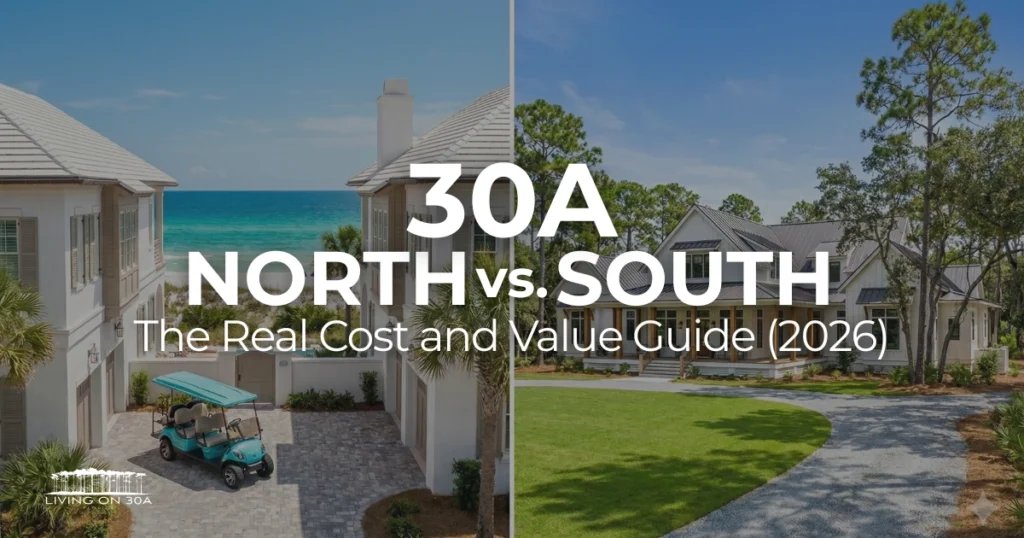

Living in Watersound Origins means choosing the one Watersound community built for residents instead of renters. It sits inland, north of Highway 98, about two miles from the beach, and it runs on a six-month minimum lease rule that keeps nightly rentals out. That single rule shapes almost everything: who your neighbors are, what your insurance costs, and how the place feels on a Tuesday in January. Here is the honest breakdown of the costs, the rules, and the trade-offs before you buy.
Living in Watersound Origins: What It’s Actually Like
Watersound Origins is an inland, master-planned community north of Highway 98 near Inlet Beach, developed by The St. Joe Company. Roughly three in four homes are primary residences. Short-term rentals are not allowed, with a six-month minimum lease. The median sold price over the past 12 months was $945,000, and the community sits in low-risk Flood Zone X.
Most of what gets marketed on 30A is built for the rental calendar. Origins is the exception. It was designed for people who want to live here, and the numbers back that up. About 75 percent of owners are full-time residents, with the rest split between second homes and long-term tenants. If you have spent any time researching the way 30A actually lays out, you already know how rare that resident-first mix is this close to the water.
I will be direct about who this article is for. If you want a beachfront trophy property or a nightly rental machine, Origins is the wrong fit, and I will show you why below. If you want a real neighborhood with amenities, lower carrying costs, and a Publix five minutes from your door, keep reading.
Where Watersound Origins Sits, and Why “North of 98” Matters
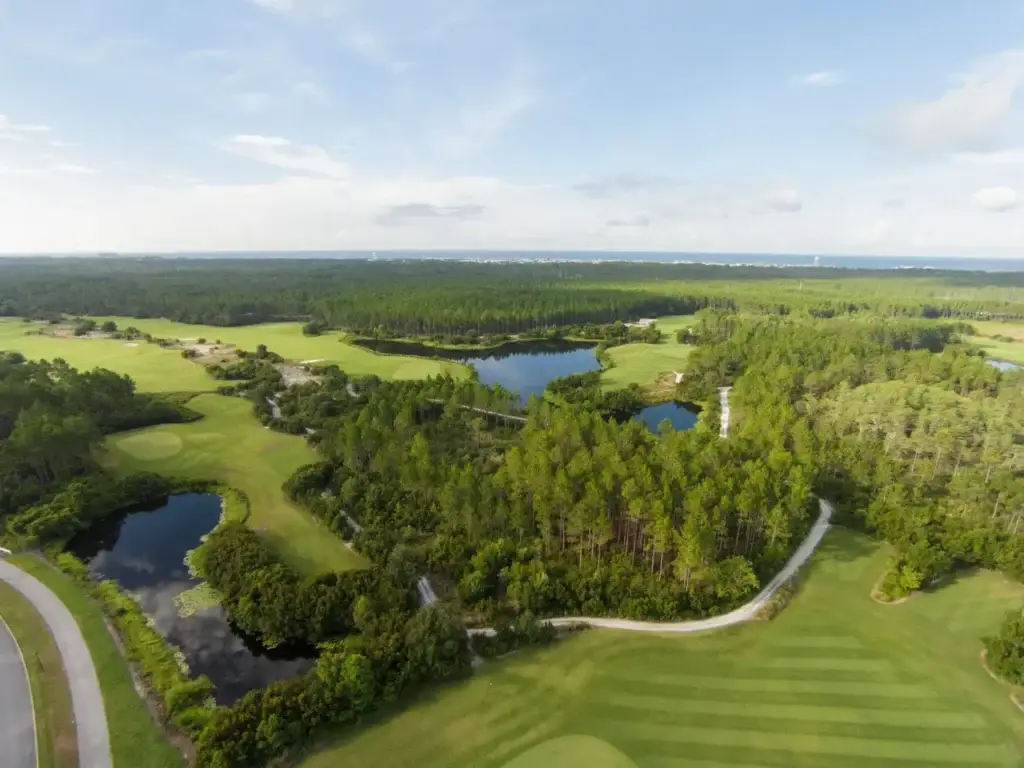
Origins is inland by design. It sits north of Highway 98, with 30A about two miles south. You cross 98 to reach the beach towns, which is exactly why the community lives and prices differently from the Gulf-front neighborhoods. That inland position is the reason insurance is lower, lots are larger, and you get more house for the money. It is also the reason you are not walking to the sand in flip-flops.
Here is how the location actually works day to day:
- 30A is two miles south, easy to reach by golf cart or by bike on the community’s paved trail system.
- Public beach access is close. You have regional access points on 30A about three miles away, or the Inlet Beach Regional Access, one of the largest public accesses in Walton County, about 2.5 miles away.
- The Watersound Beach Club is roughly five miles away. Many residents choose to join, though that is a separate membership I will cover below.
- Northwest Florida Beaches International Airport (ECP) is about 22 miles out, which is genuinely convenient for a second-home or relocation buyer. I break the airport routes down further in the getting-to-30A guide.
If you are weighing inland value against beachfront premium, that decision is the whole subject of my breakdown on the real differences between south and north of 30A. Origins is the clearest example of the trade in action.
How Origins Differs From the Other Three Watersounds
The Watersound name causes more buyer confusion than anything else on 30A, so let me clear it up. There are four separate Watersound communities, and they are not interchangeable:
- Watersound Beach is the gated, Gulf-front community on 30A with private beach access. It allows short-term rentals in many sections and carries higher dues. That is the one people usually mean when they say “Watersound,” and it is covered in my comparison of how Watersound Beach stacks up against WaterColor.
- Watersound West Beach sits across 30A near Deer Lake, with boardwalk beach access.
- Watersound Camp Creek is the gated, golf-focused, ultra-luxury enclave.
- Watersound Origins is this community: inland, north of 98, resident-focused, and rental-restricted.
Same brand, four very different price points and lifestyles. If someone quotes you a “Watersound” statistic without telling you which one, the number is close to meaningless.
The Homes: Builders, Prices, and What Your Money Buys
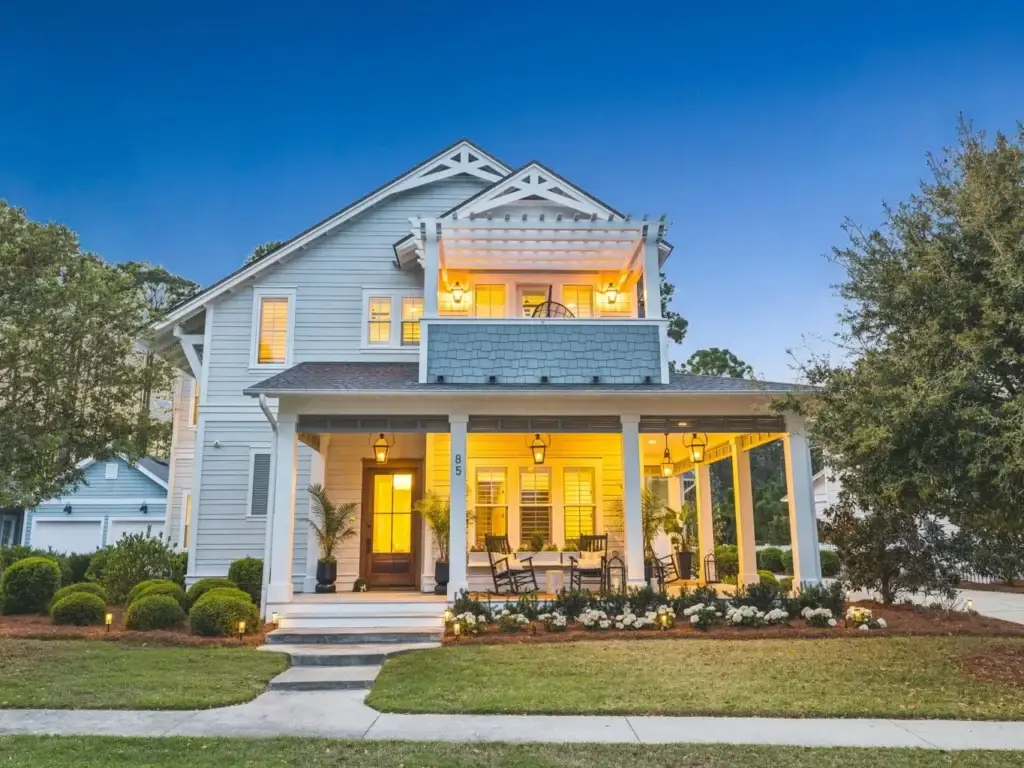
Origins is a builder community with a wide range of product, from townhomes to custom estates. Most market summaries blend every sale into one tidy number, and that number hides the real story. When you separate new construction from resale, using my own MLS data from the Emerald Coast Association of Realtors over the trailing 12 months, you are looking at two very different markets:
| Metric | New Construction (2025 and newer) | Resale (2024 and earlier) |
|---|---|---|
| Homes sold (past 12 months) | 113 | 135 |
| Median sold price | $1,068,960 | $887,500 |
| Median price per square foot | $421 | $418 |
| Median home size | 2,425 sq ft | 2,262 sq ft |
| Median days on market | 9 days | 57 days |
| Median sold-to-list ratio | 100% | 98% |
| Median sold-to-original-list ratio | 100% | 96% |
The gap is the whole point. New construction in Origins moves fast and firm. At the median, a new home goes under contract in about nine days at 100 percent of list price, and on average slightly above it. Builders are pricing to the market and buyers are taking it, which means very little room to negotiate.
Resale is a different animal. The median resale home takes 57 days to sell, closer to 70 when you count the full cumulative time on market. It sells at about 98 percent of its current list price and about 96 percent of its original list price. In plain terms, resale sellers are cutting prices, and resale buyers have real leverage. Among resale homes that adjusted price, the average cut was roughly $96,000.
Here is the nuance most people miss: the price per square foot is nearly identical between the two, $421 new versus $418 resale. So resale is not actually cheaper by the foot. What you are buying with resale is negotiating room and time, not a lower unit price. If you want certainty and speed, new construction delivers it, but you pay full freight. If you have patience and want leverage, resale is where the deals are.
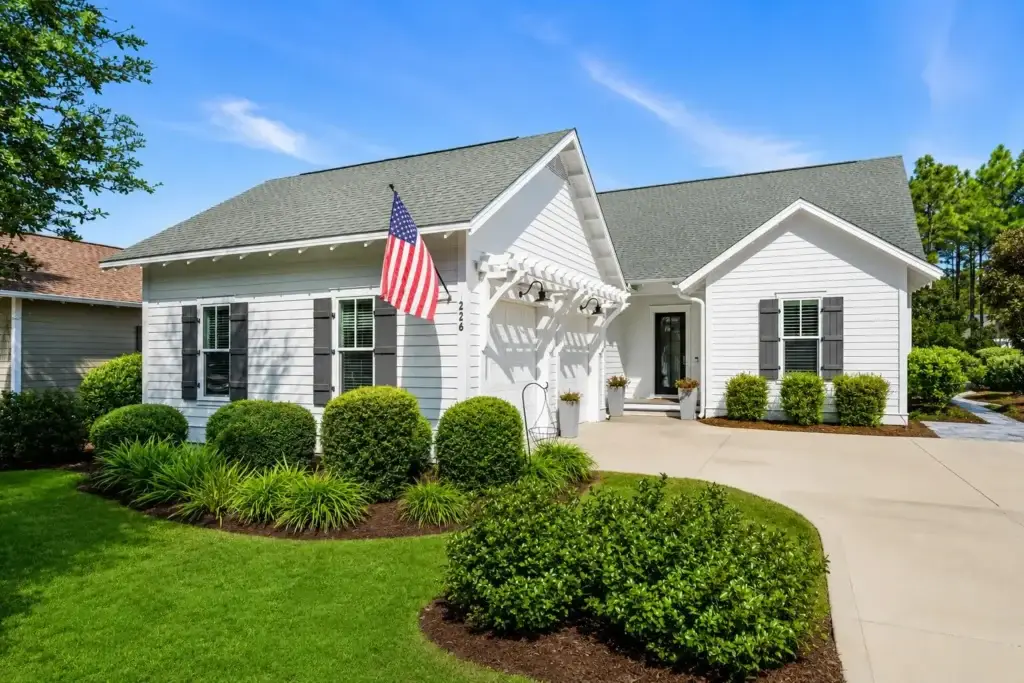
The current active builders in Origins include Huff Homes, Romair Homes, Cole Construction, Key Lime Construction, Dune Construction, Fischer Homes, Boswell, Arkon Group, and Kolter Homes. Each brings its own plans and price points, which is why you can find an attached home in the mid-$500,000s and a custom estate north of $3 million inside the same community.
NatureWalk at Watersound Origins vs. the Rest of the Community
One important distinction: NatureWalk at Watersound Origins is a separate gated section within Origins, developed by Kolter Homes, with its own amenity center called the Gathering Place. It is not the same as NatureWalk at Seagrove, which is a different Kolter community entirely and gets its own guide on this site. If a listing says “NatureWalk,” confirm which one, because the location, dues, and feel are different.
Amenities: Village Commons, Origins Golf, and Lake Powell
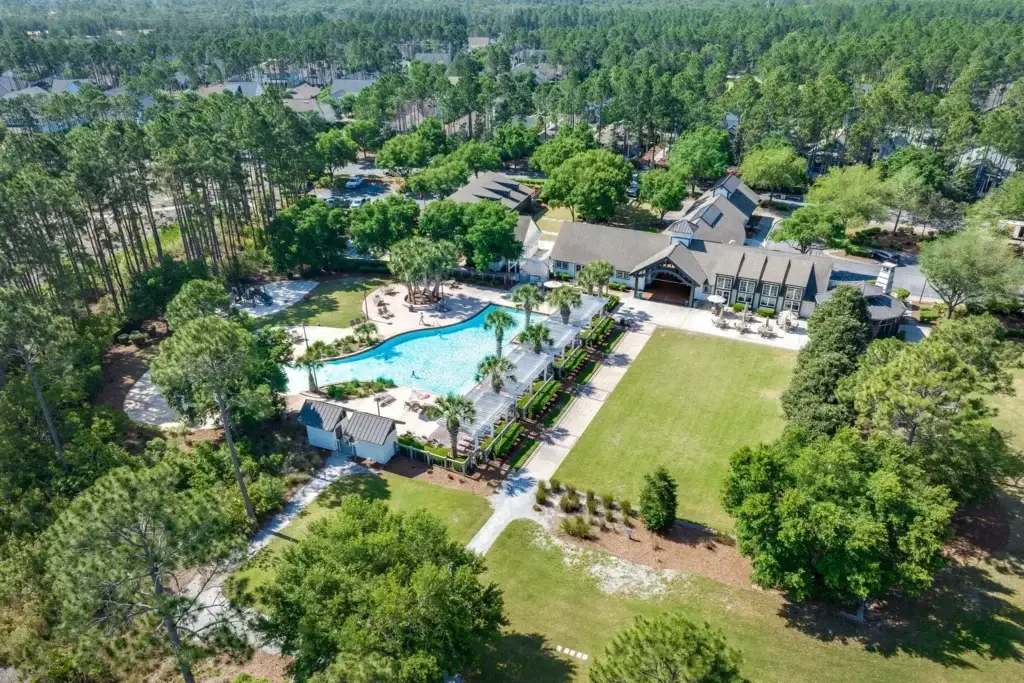
The amenity core is the Village Commons: a resort-style, zero-entry pool, a fitness center, tennis and pickleball courts, event lawns, and neighborhood parks. There is also dock access to Lake Powell, one of the largest coastal dune lakes in Florida, which you can learn more about through Camp Helen State Park on the lake’s southern edge. Kayaking and paddleboarding on Lake Powell are part of daily life here.
Then there is the golf, and this is where competitors consistently get it wrong. The Origins Golf Course was designed by Davis Love III and his Love Golf Design team, not Greg Norman. Norman designed the nearby Shark’s Tooth course. Origins is a walkable short course, roughly 1,800 yards, that plays as a six-hole regulation layout or a ten-hole par 3, and it has been recognized among the best par 3 courses in the country. It is a real amenity for casual golfers and families, and Origins owners have access to it. If you get told this is a Greg Norman course, you are being sold someone’s copy-paste research.
What the Watersound Town Center Adds
The community entrance opens onto the Watersound Town Center, and this is a genuine differentiator. Rather than a distant strip of shops, you have an open-air lifestyle center anchored by a full Publix, plus Starbucks, dining like Ambrosia Prime Seafood and Steaks, medical offices including Ascension Sacred Heart, and a growing mix of retail and professional services. The center is still expanding, so expect ongoing construction and new tenants over the next few years. For a buyer who wants daily conveniences without driving to Destin, this is a real quality-of-life win.
What Your Dues Do and Don’t Include
This trips people up, so here is the clean version. Your Origins HOA dues include access to the Village Commons amenities and the Origins short course. That is the Origins-level membership, bundled in.
The full Watersound Club is separate. Membership in the Watersound Club, which covers the private Beach Club, the Camp Creek Club, and the championship golf courses, is a separate paid membership that many Origins residents choose to add. It is not automatic and not included in your HOA dues. Budget for it separately if beach club access or championship golf matters to you.
HOA Fees and the Real Cost of Ownership
HOA dues in Origins are tied to your home type, not your sub-phase. There is no dues difference from one phase to the next. Here are the current confirmed quarterly figures:
| Home Type | Quarterly Dues | Annual |
|---|---|---|
| Townhomes | $618 | $2,472 |
| Garden Homes / Attached | $924 | $3,696 |
| Single-Family (non-NatureWalk) | $701 | $2,804 |
| NatureWalk Origins Homes | $840 | $3,360 |
For single-family, non-NatureWalk homes, that $701 breaks down as $380 per quarter to the Watersound Origins HOA and $321 per quarter to St. Joe for amenities. Compared to Gulf-front and gated beach communities on 30A, these are moderate dues for the amenity package you get.
Insurance is the other big line item, and here Origins has a structural advantage. The community sits in Flood Zone X, the lowest-risk designation, which means federally required flood insurance generally does not apply. You can confirm any specific address through the FEMA Flood Map Service Center. That said, this is still the Florida panhandle, so wind and hurricane exposure keeps premiums meaningful. In my experience, average annual policy premiums here run about $7,000 to $12,000 depending on the home and the coverage selected. That is real money, but it is materially less than what many Gulf-front owners pay.
Investment Potential: Rental Rules & ROI
Here is the honest read, because this section decides whether Origins is right for you.
Watersound Origins does not allow short-term rentals. The minimum lease is six months. If your plan is nightly vacation-rental income, this is the wrong community, full stop. Go look at Watersound Beach or other STR-friendly neighborhoods instead. I would rather tell you that now than watch you close and find out later.
For everyone else, that same rule is the entire investment thesis. The six-month minimum is why Origins holds its resident character, and that character is what protects long-term value. You are not competing with a revolving door of weekend renters. You get quiet streets, stable neighbors, and a community that functions year-round.
The ROI case here rests on three things:
- Liquidity, with a caveat. New construction here sells in about nine days at full price, so demand is real. Resale is slower, a median of 57 days, and trades below list. That split matters: if you buy resale you have negotiating leverage, and if you ever sell one, you need to price it honestly or it sits.
- Lower carrying costs. Flood Zone X, moderate dues, and no need for a short-term rental management company all reduce your annual cost to hold.
- Long-term rental demand. With so many people relocating to the area, six-month-plus leases in a rental-scarce, amenity-rich community rent well. Long-term management in this market typically runs about 8 to 10 percent of monthly rent, far less drag than the 20 to 30 percent you lose to short-term management and turnover elsewhere.
If you are the kind of buyer who is thinking about full-time life on 30A or planning a relocation, the math favors Origins. If you are underwriting a pure nightly-rental play, it does not.
The Honest Cons of Watersound Origins
Every community has trade-offs. Here are the real ones:
- You are not on the beach. Two miles inland is a golf cart or bike ride, not a walk. If toes-in-the-sand-from-your-porch is the dream, this is not it.
- No short-term rental income. For investors who need nightly cash flow, the six-month rule is a hard no.
- The Town Center is still being built out. More tenants and amenities are coming, but so is construction noise and change over the next few years.
- Watersound Club costs extra. If you want the Beach Club and championship golf, budget for a separate membership on top of your dues.
- Insurance is not cheap in absolute terms. Zone X helps, but $7,000 to $12,000 a year is still a real number in the panhandle.
- Lot quality varies. Some homes back to the golf course or a road. Walk the specific lot before you fall for the floor plan.
None of these are dealbreakers for the right buyer. They are just the truth, and you should hear it before you write an offer.
Who Watersound Origins Is Right For
Origins is a strong fit if you are a full-time resident, a remote worker, a growing family, or a snowbird who wants a genuine neighborhood with amenities and daily conveniences, and you do not need short-term rental income. It also suits buyers who want to be near the beach towns like Seaside, WaterColor, and Rosemary Beach without paying Gulf-front prices or carrying Gulf-front insurance.
It is the wrong fit if you want beachfront living, a nightly rental investment, or a walk-to-the-water lifestyle. In that case, the Rosemary and Alys Beach comparison or the value-focused Inlet Beach options are better places to start, and it is worth understanding how public and private beach access works on 30A before you commit anywhere. Families cross-shopping the manicured east-end neighborhoods should also read my take on Seaside versus WaterColor for families, and anyone timing a scouting trip can use the seasonal guide to visiting 30A and the nearby luxury of Alys Beach as reference points.
If you want to walk your specific situation through the numbers, that is exactly what I do.
Frequently Asked Questions
Are short-term rentals allowed in Watersound Origins?
No. Watersound Origins does not permit short-term or vacation rentals. The minimum lease term is six months. This rule is a deliberate part of the community’s design and is a major reason so many buyers choose Origins as a primary or second home rather than an investment rental.
How much are HOA fees in Watersound Origins?
HOA dues are based on home type and are consistent across sub-phases. As of 2026, townhomes are $618 per quarter, garden and attached homes are $924 per quarter, standard single-family homes are $701 per quarter, and NatureWalk Origins homes are $840 per quarter. Dues include access to the Village Commons amenities.
Is Watersound Origins in a flood zone?
Watersound Origins sits in Flood Zone X, the lowest-risk flood designation, so federally required flood insurance generally does not apply. Wind and hurricane exposure still affects premiums, and average annual policy costs typically run about $7,000 to $12,000 depending on the home and coverage. Always verify the specific address on the FEMA flood map.
Thinking About Origins? Let’s Talk.
Watersound Origins rewards buyers who know exactly what they are getting and what they are giving up. I track this market with my own MLS data, and I will give you the honest read on any home you are considering here. Book a no-pressure call and let’s see if Origins fits your plan.
Call or Text Me Directly: 850-585-0642
Email: andy@andyandyon30a-com