

If you’re comparing WaterColor vs. Watersound Beach, you need more than marketing language. Both are luxury communities along 30A. Both cost $2M to $10M+. But they deliver completely different daily experiences, and the wrong choice will cost you more than money.
Important clarification: This comparison focuses on Watersound Beach, the main gated, south-of-30A luxury community (districts include Bridges, Peninsula, and Dunes). This is different from Watersound Origins (north of Highway 98, different price point and vibe) and Watersound West Beach. If you’re looking at properties in Origins, the HOA fees and price examples here won’t match. For a closer look at WaterColor specifically, check out our full WaterColor guide. If you’re still getting oriented to how 30A is laid out, start there first.
Quick Verdict: WaterColor vs. Watersound Beach
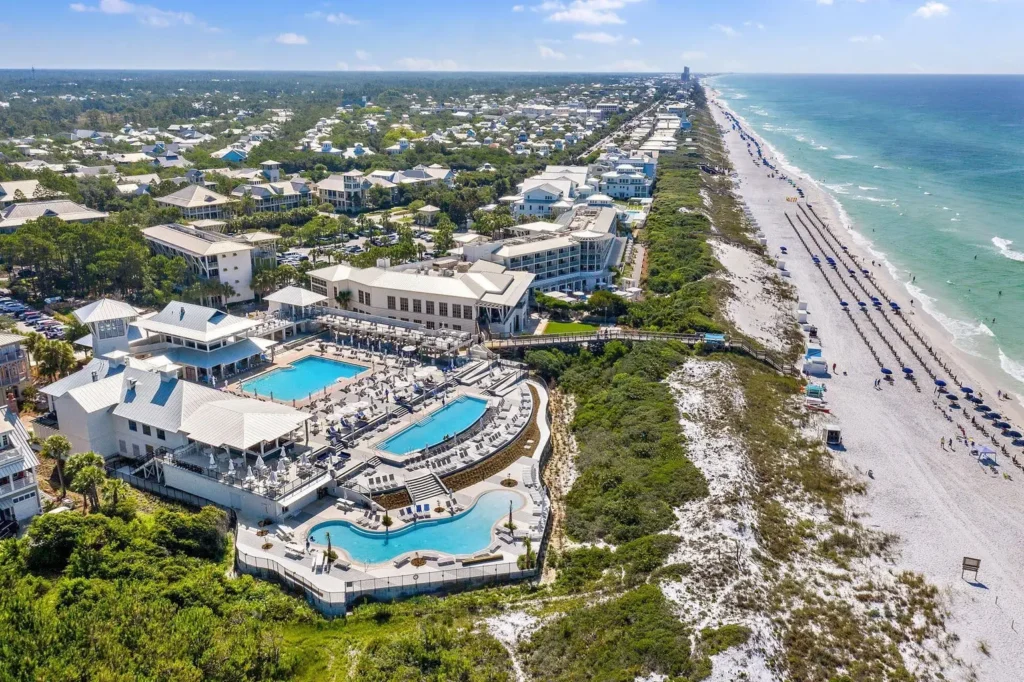
WaterColor is a walkable resort town built for families who want programming, convenience, and rental income. Watersound Beach is a gated, private enclave built for buyers who value silence, exclusivity, and a true escape from crowds. The right choice depends on whether you prioritize convenience or seclusion, not which community is “better.”
| Factor | WaterColor | Watersound Beach | Winner |
|---|---|---|---|
| Best For | Families wanting resort amenities and walkability | Buyers prioritizing privacy and quiet | Tie (lifestyle dependent) |
| Annual Costs | $50k to $60k (HOA + taxes) | $41k to $49k (HOA + taxes), add $14,400+/year if St. Joe Club | Watersound Beach (lower base costs) |
| Beach Access | 5 to 15 min walk (North of 30A homes cross highway) | 10 to 15 min walk over dune bridges | WaterColor (closer from south side) |
| Beach Experience | Organized, wristbands required, shares public access | Private, gated, no wristbands | Watersound Beach (exclusivity) |
| Walkability | Publix, restaurants, shops within 15 min walk | 5 to 7 min drive to Publix/dining (car-dependent) | WaterColor (convenience) |
| Rental Income | High demand, 20 to 30+ weeks/year | Great potential, but fewer owners actually rent, leading to greater privacy. | WaterColor (higher demand due to amenities) |
| Privacy | High turnover, resort crowds | Quiet streets, fewer owners actually rent = fewer tourists | Watersound Beach (seclusion) |
| Golf Cart Freedom | Exclusive rental contract with one vendor; strict parking rules | No rental carts allowed behind the gates; owner-registered carts only | Tie (both restrictive, different reasons) |
The Bottom Line:
Choose WaterColor if you want a walkable resort town with organized activities, don’t mind crowds, and value convenience over seclusion.
Choose Watersound Beach if you’re paying for peace and privacy, prefer a gated private beach without wristband checks, and don’t mind driving to the grocery store or dinner.
Neither is cheap. Budget $50,000 to $60,000 per year in carrying costs (excluding mortgage) for either community, plus $25,000+ in closing transfer fees and potential $75,000 St. Joe Club initiation + $1,200/month dues (if you choose to join). These annual costs are consistent with what you’ll find across the luxury end of 30A’s real estate market.
The “Boring” Financials: HOA and Club Fees
Let’s start with the numbers that actually matter to your accountant. This is where the “luxury” premium reveals itself in quarterly invoices.
HOA and Fee Comparison
| Cost Category | WaterColor | Watersound Beach |
|---|---|---|
| Quarterly HOA Fee | ~$1,500 (varies by district) | ~$1,235 |
| New Buyer Transfer Fee | 0.5% of purchase price | 0.5% of purchase price |
| Property Tax Rate | 1.1% to 1.25% | 0.9% to 1.1% (varies by area) |
| St. Joe Club Membership | Optional (Beach Club included) | Socially mandatory for greater amenities |
| Special Assessment Risk | Higher (aging infrastructure) | Lower (newer development) |
Example on a $4M property:
WaterColor: $6,000/year HOA + $44,000 to $50,000 taxes = approximately $50,000 to $56,000/year
Watersound Beach: $4,940/year HOA + $36,000 to $44,000 taxes = approximately $40,940 to $48,940/year
You can verify current assessed values through the Walton County Property Appraiser’s website, which is also a useful tool for comparing tax bills across specific properties in either community.
The Hidden Costs Everyone Forgets
1. The 0.5% New Buyer Fee: Both communities charge this one-time transfer fee. On a $5M property, that’s $25,000 at closing that isn’t going toward your mortgage or down payment. Most buyers forget to budget for this. If you’re still mapping out total purchase costs, our guide to the real value differences on 30A breaks down how location affects your overall investment.
2. Special Assessments Risk: WaterColor’s infrastructure is older and more extensive (sidewalks, street lighting, the elaborate beach club complex). Special assessments for capital improvements can hit homeowners. Watersound, being newer and less developed, has lower infrastructure maintenance costs but isn’t immune. Under Florida Statute 720, HOAs must follow specific procedures before levying special assessments.
3. Property Taxes: WaterColor properties typically see tax rates around 1.1% to 1.25% due to different taxing district assessments compared to some Watersound areas. On a $4M home, that’s a $4,000 to $6,000 annual difference.
4. The St. Joe Club Membership (The “Optional” Fee That Isn’t): Technically, St. Joe Club membership is optional for both communities. Practically? In Watersound Beach, it’s socially mandatory if you want to access the Shark’s Tooth Golf Club, Camp Creek Golf Club, the newest Third Golf Course, the Watersound Beach Club and Camp Creek Club amenities. Current initiation fees are $75,000, plus monthly dues starting around $1,200+. In WaterColor, the built-in Beach Club access makes St. Joe Club membership less critical, though some residents join for golf privileges.
Annual carrying costs reality check (excluding mortgage):
WaterColor without St. Joe Club: $50,000 to $60,000/year
Watersound Beach with St. Joe Club: $48,000 to $56,000/year + $75,000 initiation.
If you’re comparing these numbers to other luxury communities on 30A, check out our Rosemary Beach vs. Alys Beach comparison to see how the east end’s other premium neighborhoods stack up on costs.
Beach Logistics: Steps, Carts, and Wristbands
This is where the Nature vs. Nurture split becomes visceral. Getting to the beach sounds simple until you’ve done it with three kids, a cooler, and no golf cart.
The “Nature” Reality (Watersound Beach)
Deeded Beach Access: Watersound owns vast stretches of private, gated beach. No public access points means no crowds from outside the community. This is the “Nature” premium you’re paying for: exclusivity and space. For context on how beach access works across the entire corridor, our 30A beach access guide explains the public vs. private rules.
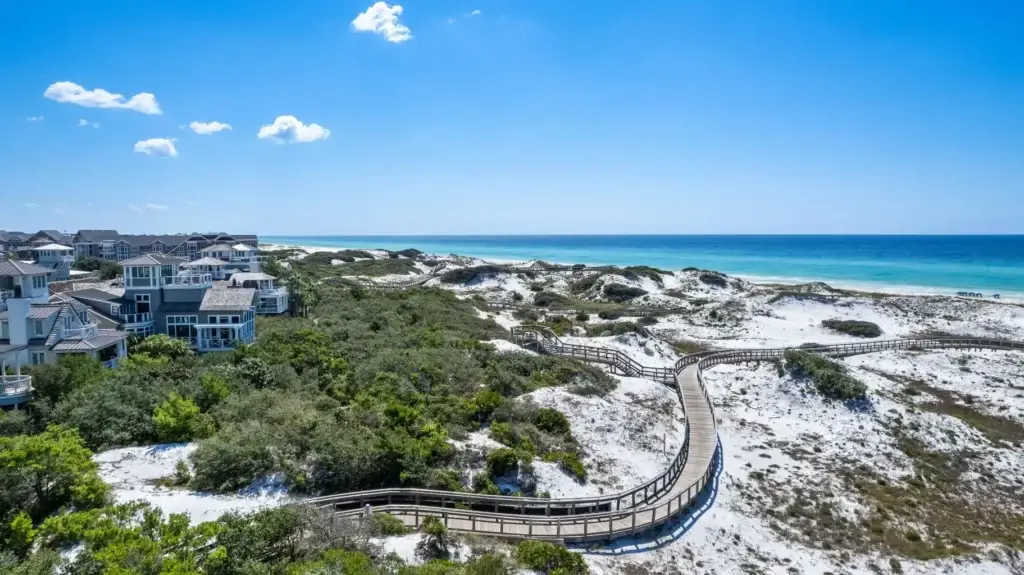
The Walk (or Drive): Here’s what they don’t tell you. Many Watersound Beach homes are 10 to 15 minutes on foot from beach access. You’ll cross elevated boardwalks and dune bridges designed to protect the coastal ecosystem. If you’re in the Bridges or Dunes districts, you’re walking over 1,000 feet of boardwalk. It’s scenic, but a haul. It’s beautiful. It’s also exhausting when you’re hauling beach gear. Most residents drive to designated beach parking, then walk the final stretch.
One piece that many potential buyers miss is the golf cart accessible beach accesses built into Watersound Beach. This is one of the most unique features of this community. In certain areas the boardwalks to the sand are designated for “golf cart only.” These provide parking at the beach, allowing residents to avoid the long walk. Once parked you are literally steps from the sand. This makes Watersound Beach a clear winner, especially for those with mobility concerns.
No Wristband Theater: Once you’re on the beach, there’s no security checking IDs or wristbands. You’re in. The peace is real.
South of 30A Advantage: All of Watersound Beach is south (beach side) of Highway 30A. You’re not crossing a highway to get to the water. That’s a major advantage over parts of WaterColor. We break down why this matters so much in our south vs. north of 30A comparison.
The “Nurture” Reality (WaterColor)
Wristband Fatigue: WaterColor Beach Club has strict security protocols. Ages 5+ require wristbands. Guests need visitor passes. Lost wristband? $50 replacement fee. Security checks are frequent, especially in summer. Some families love the controlled environment; others find it exhausting.
Beach Club Pricing (2026 Season):
Front row chair setup: $105/day (peak summer)
Middle row chair setup: $95/day
These aren’t optional if you want a prime spot during high season.
The Crowd Reality: WaterColor uses public beach access points, which means you share the sand with day-trippers, beachgoers from other communities, and anyone with a parking pass. The Beach Club area is exclusive, but step outside those ropes and you’re on public beach. Watersound’s gated beach doesn’t have this issue.
North of 30A Problem: Much of WaterColor’s newer inventory (Phase 3 and beyond) is north of Highway 30A. That means crossing the highway on foot or by cart every time you go to the beach. To be clear, 30A is a two-lane road where traffic typically stays under 15 mph and drivers stop at crosswalks for pedestrians. It’s not dangerous, but it does add time and logistics to your beach routine, especially when you’re hauling gear. The resort shuttle helps, but it runs on its own schedule.
The Convenience Trade: What WaterColor lacks in beach exclusivity, it makes up for in amenities within walking distance. The Beach Club has pools, restaurants, fitness facilities, and programming for kids. If you want a resort experience where everything is orchestrated, this is it. For a deeper look at what daily life is actually like inside the gates, read our WaterColor costs and rules guide.
The “Nuisance” Factors: Golf Carts and Groceries
These aren’t deal-breakers, but they’re daily friction points that compound over time.
Golf Cart Wars
WaterColor’s Exclusive Contract: You cannot bring just any golf cart into WaterColor. The community has an exclusive contract with the Electric Cart Company. If you want to rent a cart for your stay or your guests’ stay, you must go through them. Personal low-speed vehicles (LSVs) are allowed if you own property, but parking restrictions are strict. No street parking in many areas, and you’ll need designated cart parking at your home. The goal is to maintain the “aesthetic,” but it’s a hassle.
Watersound Beach: No Rental Carts Behind the Gates. Behind the gates in Watersound Beach, outside golf cart and LSV rentals are banned entirely. The association can fine, ticket, boot, or tow unauthorized carts. You can only use a cart if it’s owner-provided and registered with the HOA. If your property doesn’t include a registered cart, you can still drive your car, but you cannot rent a street-legal cart and bring it behind the gates. Watersound West Beach follows the same pattern: no rental carts, owner-registered carts only. One important note: many vacation rentals use “Watersound” in the listing name but are not actually behind the Watersound Beach gates, and those properties may follow completely different cart rules. Always confirm whether your address is truly inside the gates before assuming cart access.
The verdict: If golf cart freedom matters to you, neither community makes it easy. WaterColor locks you into an exclusive rental vendor with strict parking rules. Watersound Beach bans rental carts behind the gates entirely. Research the specific rules for your property before buying in either community.
Car-Dependent Convenience
WaterColor’s Walkability: You can walk or bike to Publix in about 15 minutes from most WaterColor addresses. There’s also proximity to restaurants, shops, and services along 30A. This is the “Nurture” convenience at its finest. You don’t need to drive your car for a week if you don’t want to.
Watersound Beach’s Reality: Watersound Beach is no longer a food desert (thanks to the new Publix at Watersound Town Center), but it’s car-dependent. You’re not walking there with a tote bag. You’re driving 5 to 7 minutes out of the gates and up to Highway 98 to reach it. It breaks the “bubble” feeling. You’re not stranded, but you’re back in your car. Same story for restaurants and services. Everything requires a drive.
Reality check: If you’re used to urban or suburban convenience, Watersound Beach will feel remote. If that’s exactly what you want (and you don’t mind meal planning ahead or short drives), it’s perfect. If daily convenience is a priority, WaterColor operates more like the walkable communities you’ll find in our Seaside vs. WaterColor comparison.
Rental Reality: The “Investment” Angle
If you’re buying as an investment property, the rental rules are make-or-break.
WaterColor: The Rental Machine
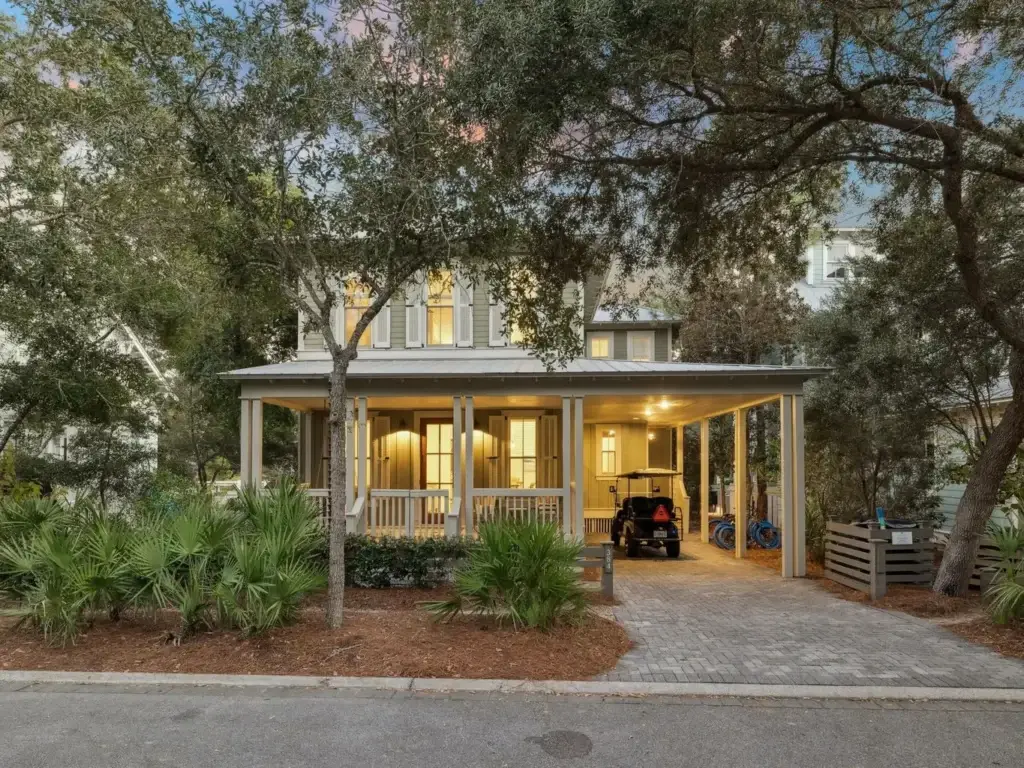
WaterColor is built for rentals. High occupancy rates, strong demand, and proximity to amenities make it a rental workhorse. Expect 20 to 30+ weeks of occupancy annually if managed well.
The downside: high turnover means high wear and tear. Carpets, appliances, and paint need refreshing more frequently. You’re also competing with dozens of other rental properties in the same community, which can drive rates down during shoulder season. For a look at how seasonal timing affects the rental market, our seasonal guide breaks it down.
Tenant profile: families with kids who want the resort experience. Pools, beach clubs, organized activities.
Watersound Beach: Rentals Allowed, Permit Required
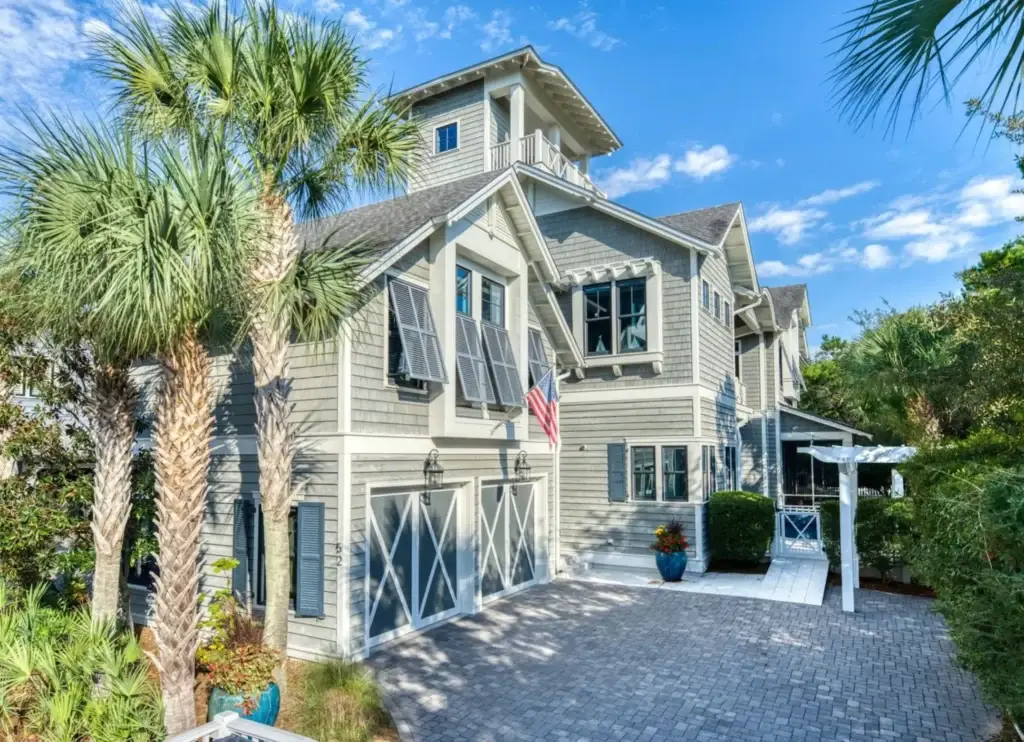
Short-term rentals are allowed in Watersound Beach, but you must go through the Walton County short-term rental permitting process. This is a county-level requirement, not an HOA ban. Budget time for the application and make sure you’re compliant before listing on Airbnb, VRBO, or through a management company.
The practical difference from WaterColor: Watersound Beach sees less rental turnover overall because fewer owners choose to rent their properties. That means quieter streets and more consistent neighbors, even though rentals aren’t prohibited. If investment income matters, our Inlet Beach vs. Rosemary Beach comparison explores how rental dynamics vary across the east end.
Local Insights You Won’t Find in Brochures
South of 30A vs. North of 30A
Watersound’s advantage: The entire Watersound Beach community is south (beach side) of Highway 30A. You’re not crossing any road to get to the water.
WaterColor’s reality: Much of the newer WaterColor inventory (Phase 3 and beyond) is north of 30A. That means beach trips involve crossing the highway on foot, by bike, or by cart. To be clear, 30A is a two-lane road where traffic typically stays under 15 mph and drivers stop at crosswalks for pedestrians. It’s not dangerous. But it does add time and logistics to your beach routine, especially if you’re hauling gear or have young kids in tow. The resort shuttle helps, but it runs on its own schedule.
Why it matters: The south-of-30A premium is real and reflected in pricing across the corridor. Being on the beach side of the road means fewer steps between your door and the sand. If you’re looking at a WaterColor home north of 30A, factor in the extra time, not the extra risk. We break down how this pricing dynamic works in our south vs. north of 30A comparison.
The Verdict: Who Should Live Where?
Neither community is objectively “better.” They serve different lifestyles. If you’re considering full-time 30A life, the daily realities below matter even more than they do for vacation use.
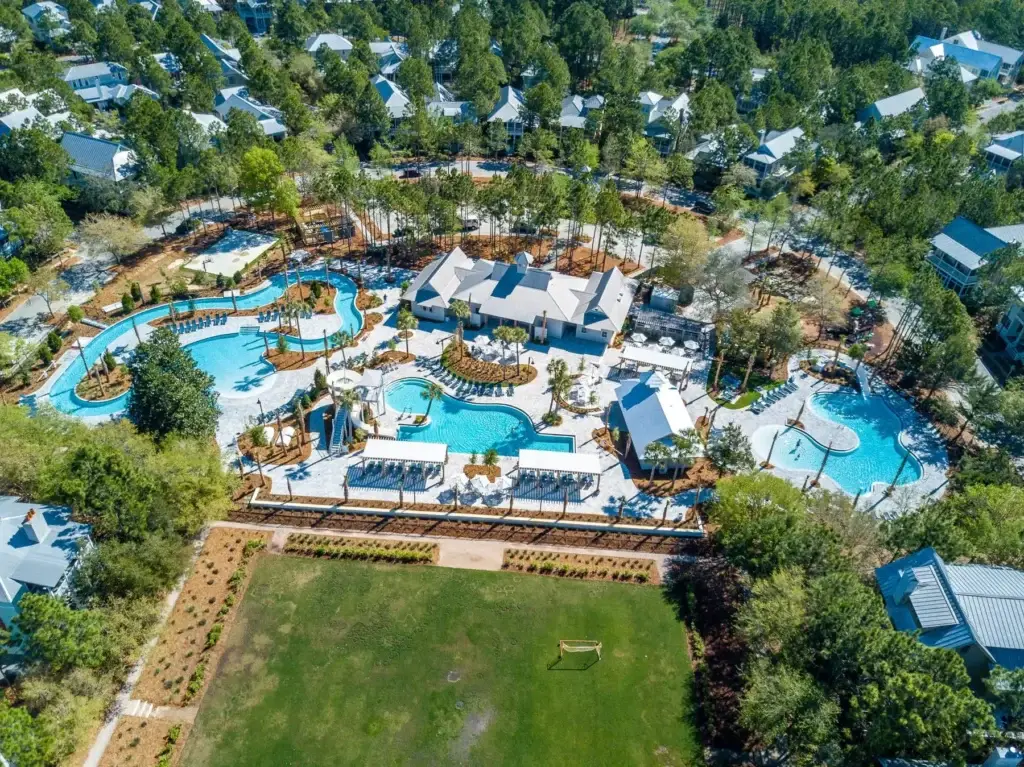
Choose WaterColor if:
You have teens who want independence (walkable restaurants, shops, and activities). You hate driving your car once you arrive, since everything is accessible by foot, bike, or cart. You love the energy of a “resort” atmosphere with programming, organized events, and a social scene. You want rental income and don’t mind turnover and wear-and-tear. You’re okay with wristband checks and structured beach club rules. You prioritize convenience over seclusion.
Choose Watersound Beach if:
You value silence over convenience, with no crowds and no resort bustle. You want a private beach experience without wristband theater. You’re okay with a 5 to 10 minute drive to groceries and dining. You prefer actual neighbors over weekly rental turnover (fewer owners choose to rent here). You don’t mind the longer walk (or drive) to the beach. You want to feel like you’re in a sanctuary, not a resort.
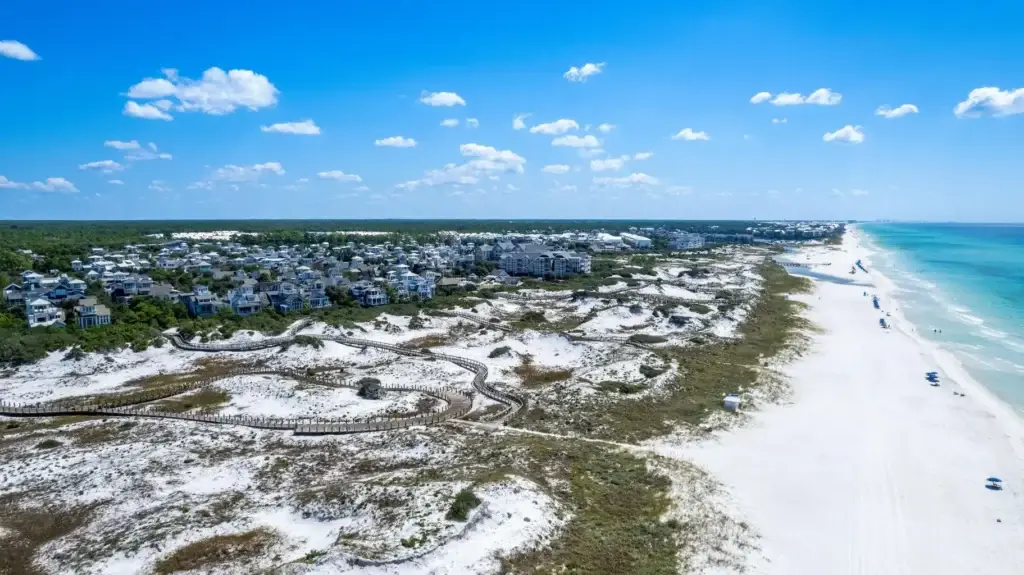
The Honest Truth
WaterColor is a curated, convenient, resort-style community. You’re paying for programming, proximity, and a turnkey beach vacation vibe. It’s “Nurture”: designed, managed, and orchestrated.
Watersound Beach is a secluded, private, quiet enclave. You’re paying for space, silence, and a sense of being away from it all. It’s “Nature”: protected dunes, private beaches, and fewer rules (but also fewer amenities within walking distance).
Both are expensive. Both have hidden costs. Both require trade-offs. The question isn’t which is better. It’s which pain points you’d rather live with.
If you’re also weighing options beyond these two communities, we’ve compared neighborhoods across the entire corridor. Our Seaside vs. WaterColor comparison looks at WaterColor’s closest neighbor, and the Rosemary Beach vs. Alys Beach showdown covers the east end’s other luxury heavyweights.
Key Takeaways for Buyers
Budget beyond the purchase price. Factor in HOA fees, transfer fees, property taxes, and potential St. Joe Club membership ($75,000 initiation + $1,200/month dues).
Understand the rental landscape. Short-term rentals are allowed in Watersound Beach with Walton County permitting, but fewer owners rent here compared to WaterColor. If rental income is part of your plan, budget for the permitting process and factor in lower demand compared to WaterColor’s resort-driven rental machine.
Visit both in peak season. Experience wristband checks, beach crowds, and golf cart logistics firsthand before deciding. Our seasonal guide can help you time your visit.
Check your exact location vs. the beach. WaterColor homes north of 30A require extra time and logistics to reach the sand. Always factor in your specific property’s proximity to beach access before buying.
Understand the lifestyle fit. WaterColor = resort energy. Watersound Beach = secluded sanctuary. Don’t buy WaterColor if you crave silence. Don’t buy Watersound Beach if you hate driving to dinner.
This is a $2M to $10M decision. Do the boring research. Talk to actual homeowners (not sales reps). Walk the neighborhoods on a Saturday in July when rentals turn over and families descend. The marketing photos won’t show you the wristband line or the 15-minute dune walk with a cooler. You need to see it for yourself.
If you’re planning a discovery trip to 30A, we’ve mapped out the logistics so you can focus on exploring communities when you arrive. And if you’re weighing whether 30A life is the right move overall, our guide to moving to 30A covers schools, internet, utilities, and everything else transplants need to know.
Frequently Asked Questions
Is Watersound Beach the same as Watersound Origins?
No. Watersound Beach is the gated luxury community south of Highway 30A with private beach access, higher price points (typically $2M to $10M+), and exclusive dune-protected lots. Watersound Origins is north of Highway 98, carries a lower price point, and has a different HOA structure and amenity set. They share the St. Joe development umbrella but are distinct communities with different rules, fees, and lifestyles.
Can I rent my Watersound Beach property on Airbnb or VRBO?
Yes. Short-term rentals are allowed in Watersound Beach. However, you must apply for and adhere to the Walton County short-term rental permitting process. Confirm current permit requirements with Walton County before listing your property.
Which community has lower annual carrying costs, WaterColor or Watersound Beach?
Watersound Beach has lower base annual costs. On a $4M property, expect approximately $41,000 to $49,000/year in HOA fees and property taxes at Watersound Beach, compared to $50,000 to $56,000/year at WaterColor. However, if you add St. Joe Club membership (socially mandatory in Watersound Beach for golf and club amenities), the gap narrows significantly once you factor in the $75,000 initiation fee and $1,200/month dues.
Ready to See Watercolor and Watersound Beach in Person?
I’ll walk you through both communities, show you the streets the listing photos don’t feature, and help you understand which lifestyle actually fits. No sales pressure. Just honest, local perspective.
OR
Call/Text Me: 850-585-0642 | Email Me: andy@livingon30aflorida.com

Pingback: 30A Beach Access: Public vs. Private Rules (2026 Guide)
Pingback: Living in Seaside FL: True Costs, HOA Rules & Reality (2026)
Pingback: Living in WaterColor FL: The Real Cost, Rules & Districts (2025)
Pingback: Living in Alys Beach FL: The Ultimate Luxury Guide (2026 Costs & Rules)
Pingback: The Real 30A Florida Guide: Towns, Truths & East vs. West