

Living on 30A full-time is one of those lifestyle decisions that looks great from the outside and turns out to be even better than expected, as long as you go in with an honest picture of what it actually costs and how daily life really works. This guide gives you that picture: the financial realities, the seasonal rhythms, the logistics of daily life, and the smart strategies long-term residents have developed to make the most of it. Consider it the insider brief that helps you plan well and enjoy it fully from day one. For a broader orientation to the corridor, the complete 30A guide is the best starting point.
What Full-Time Living on 30A Really Costs
Living on 30A full-time means budgeting well beyond your mortgage. Most year-round residents plan for an additional $15,000 to $25,000 or more annually in HOA fees, insurance, and property maintenance. Add resort-level pricing for everyday goods and a seasonal rhythm shaped by one of the most sought-after coastal destinations in the Southeast, and you have a lifestyle that rewards buyers who plan carefully and go in with clear expectations.
Here is a planning snapshot before we go deeper:
| Category | What to Expect |
|---|---|
| Cost of Living | High. Resort pricing applies to groceries, dining, and services year-round. |
| Property Tax Rate | Walton County’s countywide millage is 3.519 mills (FY 2025-26). Total combined rate across all taxing authorities runs approximately 9 mills. Property valuations along 30A are the primary driver of the overall bill. |
| HOA Fees | Highly variable. Quarterly fees range from $1,500 to $8,583 depending on community and property type. |
| Insurance | A meaningful expense that requires proper planning. Wind and flood policies are typically required. Treat all figures as estimates until you have a specific property and insurer in hand. |
| Primary Consideration | Seasonality. Summer tourist activity shapes your daily schedule from March through Labor Day. Full-timers develop a reliable playbook for navigating it. |
| Healthcare Access | No trauma center on 30A. Nearest full-service hospital is Ascension Sacred Heart in Miramar Beach, 15 to 45 minutes away depending on traffic. |
The Financial Reality Beyond the Mortgage
Every experienced 30A buyer says the same thing: understanding the full cost of ownership before closing is what makes year-round life here genuinely sustainable and enjoyable. Here is where to focus your planning.
Property Taxes: Lower Rate, Long-Term Advantage
Walton County’s countywide ad valorem millage rate for FY 2025-26 is 3.519 mills, reduced from 3.575 mills the prior year. That figure represents the county’s portion only. When school board levies and special district millages are added, the total combined effective rate across all taxing authorities runs approximately 9 mills. To put that in real-world terms: a WaterColor home assessed at $1,458,575 paid $13,179 in 2025 property taxes, an effective rate of about 0.9 percent of assessed value. You can look up any parcel through the Walton County Property Appraiser’s office.
The millage rate itself is relatively modest compared to most Florida counties. What drives the bill on 30A is property valuations, which reflect the sustained demand for this area. That said, the homestead exemption and Florida’s Save Our Homes cap create a genuinely compelling long-term advantage for full-time residents.
How the homestead exemption works: Florida’s homestead exemption removes roughly $50,000 from your taxable value in two layers. On a high-value 30A property, the immediate annual savings are modest, approximately $450 to $500 per year. The more powerful benefit builds over time through the Save Our Homes cap.
The Save Our Homes advantage: Once you homestead a property, your assessed value cannot increase more than 3 percent per year (or CPI, whichever is lower), regardless of how quickly market values rise. A non-homestead second home carries no such protection, meaning its assessed value can track market appreciation up to 10 percent annually. Over five years in a rising market, that gap becomes substantial.
Using a WaterColor property as an illustrative baseline (assessed at $1,458,575, taxes of $13,179 in 2025):
| Year 1 Tax Bill | Year 5 Assessed Value (approx.) | Year 5 Tax Bill (approx.) | |
|---|---|---|---|
| Homestead Resident | ~$12,700 (after exemption) | ~$1.64M (capped at 3%/yr) | ~$14,760 |
| Non-Homestead Owner | ~$13,179 (no exemption) | ~$1.98M (tracks market at ~8%/yr) | ~$17,820 |
That is roughly a $3,000 annual difference by Year 5, growing every year you remain in the home. Figures above are illustrative based on assumed 8 percent annual market appreciation and are not a guarantee of any specific tax outcome. Actual bills depend on final assessed values and millage rates set each year.
To qualify, you must own and occupy the property as your primary residence as of January 1 of the tax year. The filing deadline with the Walton County Property Appraiser is March 1. Missing it costs you a full year of cap protection. File as soon as you establish Florida residency.
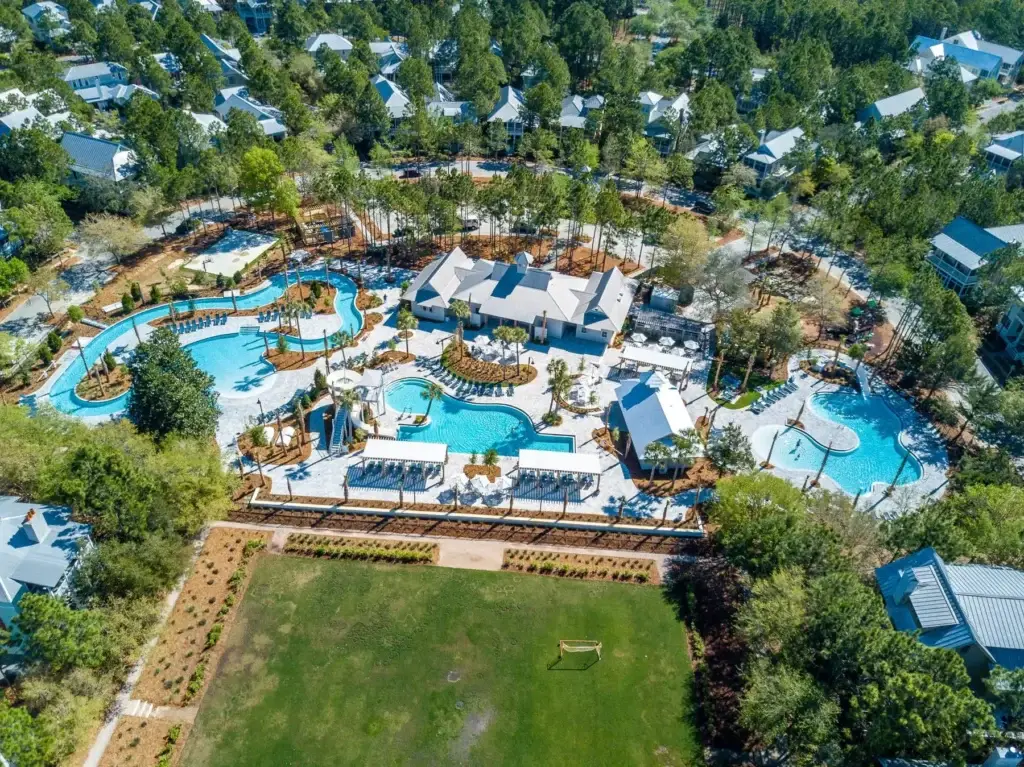
HOA Fees: What Your Dues Actually Buy You
HOA fees along 30A vary significantly by community and property type. The higher-fee communities tend to deliver genuine value through maintained beach access, resort-quality amenities, and community infrastructure that supports property values over time. The table below reflects current confirmed quarterly billing rates.
| Community | Quarterly (Single-Family) | Quarterly (Condo) | Annual Range | Key Inclusions |
|---|---|---|---|---|
| WaterColor | $1,840 | $5,228 | $7,360 – $20,912 | Master HOA, pools, Beach Club access |
| Rosemary Beach | $1,592 | $5,144 | $6,368 – $20,576 | Master HOA, town center maintenance |
| Seaside | $1,500 | $2,900 | $6,000 – $11,600 | Master HOA, community maintenance |
| Watersound Beach | $1,800 | $8,583 | $7,200 – $34,332 | Master HOA, Watersound Club access varies |
Note that many communities bill both a master HOA and a sub-HOA for your specific neighborhood or building. Always request both fee schedules before closing, not just the headline number. Beach club memberships or club access fees may be included, bundled separately, or require an additional annual commitment. For community-specific detail, the WaterColor cost and districts guide and the Rosemary Beach HOA and design code breakdown walk through exactly what you are paying for in each community. For the luxury east end comparison that includes Watersound, the Rosemary Beach vs. Alys Beach guide provides useful side-by-side context.
Insurance: Plan for It and It Does Not Surprise You
Coastal insurance is the line item that catches most buyers off guard, primarily because it is genuinely different from what people have paid in inland markets. The good news: once you understand the structure and budget for it accurately, it becomes a predictable cost of owning a premier coastal property rather than an ongoing surprise.
Important note: The cost ranges below are estimates based on real-world 30A client experience. Actual premiums vary based on your specific property, insurer, construction type, roof age, and flood zone designation. Treat these as planning benchmarks, not guarantees.
A standard HO3 homeowners policy typically excludes wind and hail damage in coastal zones. You are generally buying three layers of coverage:
- Wind policy: Covers hurricane damage. Annual premiums are estimated at $3,000 to $8,000 or more depending on home value, construction type, and roof condition.
- Flood insurance (Zone AE, high-risk): Mandatory if you carry a mortgage on a property in a FEMA Zone AE. Annual premiums are commonly estimated at $1,500 to $5,000 or more.
- Flood insurance (Zone X, lower-risk): Optional without a mortgage, but recommended. Estimated annual premiums run $400 to $800.
For properties valued at $750,000 or more, combined home, wind, and flood coverage is estimated at $8,000 to $15,000 annually in many cases. A wind mitigation inspection ($75 to $150) is worth scheduling during due diligence. It documents hurricane-resistant features like roof straps and impact-rated windows, which can meaningfully reduce wind premiums. The Insurance Institute for Business and Home Safety publishes useful coastal wind resistance guidance worth reviewing before you buy. Understanding your specific flood zone designation is also essential.
Before closing, request the CLUE Report (Comprehensive Loss Underwriting Exchange) to see whether the property has a history of water or wind claims. A clean CLUE report is a meaningful green flag for insurability.
Roof age matters: If a roof is 15 or more years old, some insurers may require replacement before binding coverage. Verifying roof age and condition early in due diligence avoids the most common insurance-related closing complications. This can be a serious frustration, especially for metal roofs that are popular in our area. These are typically rated for a lifespan of 30+ years with proper maintenance. However, insurance companies don’t take this into account. I’ve had clients decide to back out on a purchase because the metal roof was 20 years old and the insurance company wouldn’t write the policy even though the roof was in great condition.
The Logistics of Daily Life on 30A
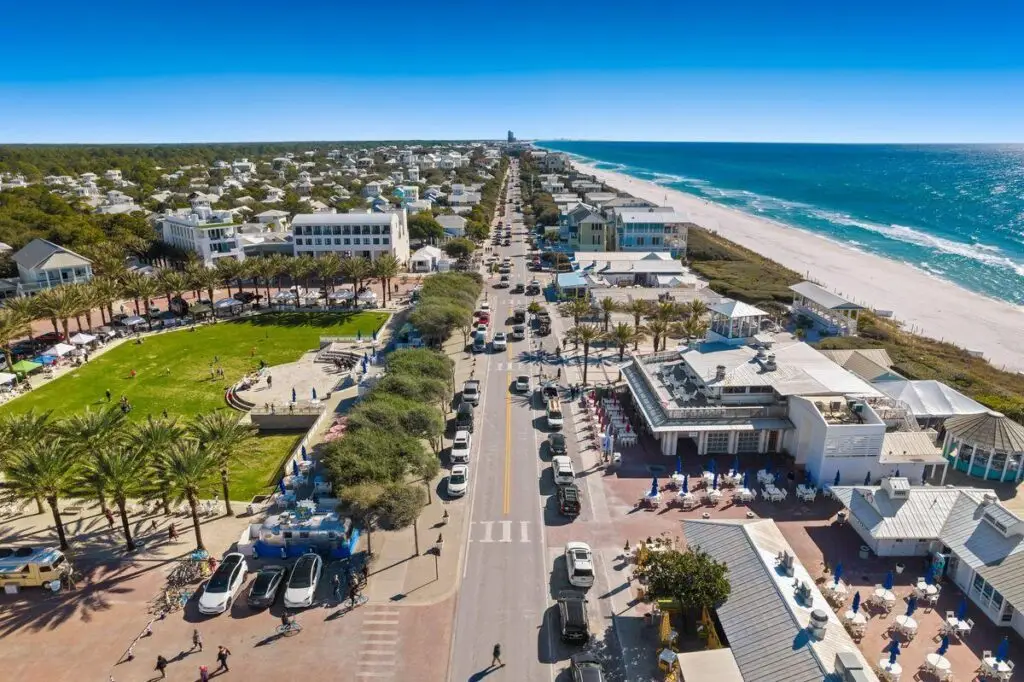
30A’s infrastructure was designed for a small beach community. Over the past decade it has become one of the most in-demand coastal destinations in the Southeast. Understanding how the two coexist makes day-to-day life here a pleasure rather than a frustration.
Internet and Remote Work: Verify Early in Due Diligence
For remote workers and entrepreneurs, connectivity is non-negotiable. The good news is that coverage is improving every year on 30A. The important step is verifying availability at the specific property address during due diligence, since coverage maps can lag actual availability.
Current providers serving most of 30A:
- Quantum Fiber: The best option where available, offering up to 940 Mbps fiber. Coverage is limited but expanding.
- Mediacom: Most widely available cable option (100 to 1,000 Mbps). Handles video calls and remote work reliably in most areas.
- CenturyLink DSL: Serves some older neighborhoods, tops out at 10 to 40 Mbps. Fine for light use, frustrating for video-heavy workflows.
- Starlink: An increasingly popular backup option in rural pockets. Handles video calls well.
The smartest move during due diligence: ask the seller for a screenshot of a recent speed test at the property. Do not rely on a coverage map alone. For a full picture of schools, internet providers, and utilities across the corridor, the Moving to 30A relocation guide is the most comprehensive resource available.
Healthcare: Know the Landscape Before You Need It
30A has urgent care clinics and family practice offices throughout the area, and many residents find the quality of local primary care to be genuinely strong. The planning note for full-time residents: there is no trauma center or full-service hospital on 30A itself.
Ascension Sacred Heart Emerald Coast in Miramar Beach is the nearest full-service hospital, 15 to 20 minutes west in normal traffic. HCA Florida Fort Walton-Destin Hospital is approximately 25 to 30 minutes west. For most day-to-day health needs this is entirely manageable. Buyers with chronic health conditions or young families benefit from establishing relationships with local providers early, and many long-term residents maintain a relationship with a concierge physician who makes house calls.
Drive Times: Planning Makes It Simple
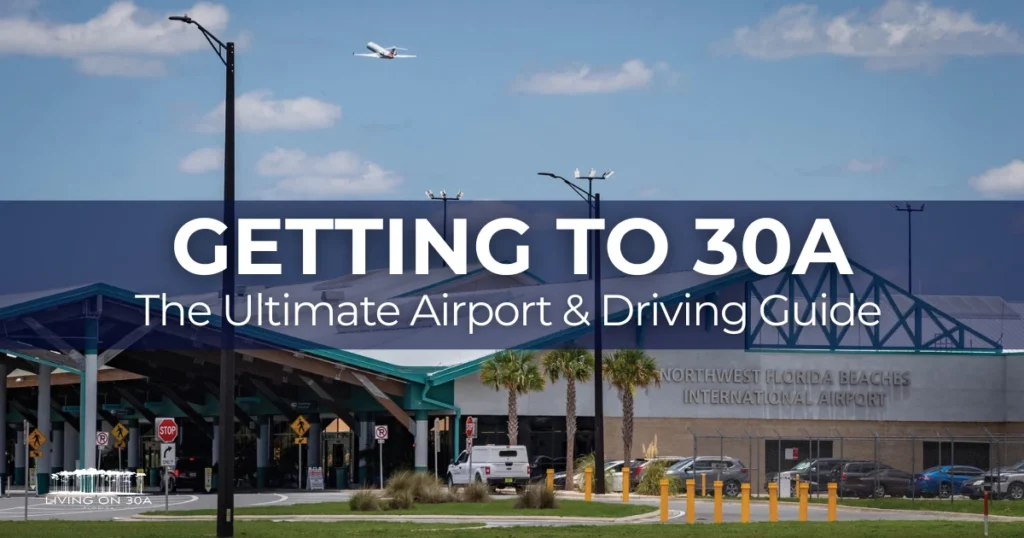
Distance on 30A is best measured in minutes, not miles. Day-to-day needs are met locally. Airport trips, big-box shopping, and specialist appointments require real drives, but once the patterns become familiar, the logistics feel entirely routine. For full airport detail and routing options, the 30A airports and driving guide covers ECP vs. VPS and every major approach route.
| From | To ER (Miramar Beach) | To ECP (Panama City) | To VPS (Destin) | To Target/Walmart |
|---|---|---|---|---|
| Inlet Beach | 25-30 min | 25 min | 60 min | 10 min |
| Rosemary Beach | 35-40 min | 30 min | 65 min | 15 min |
| Seaside/WaterColor | 25-30 min | 45 min | 50 min | 35 min |
| Santa Rosa Beach (West) | 15-20 min | 55 min | 40 min | 15 min |
| Summer Traffic Add-On | +20-30 min | +15 min | +20 min | +30 min |
Utilities and Maintenance: What Coastal Living Requires
Owning a coastal property on 30A means planning for maintenance cycles that run shorter than in inland markets. Salt air accelerates wear on mechanical systems, and buyers who budget for it from the start handle it without friction.
HVAC: Coastal units typically need replacement every 7 to 10 years rather than the standard 15 to 20. Salt air corrodes condenser coils faster than any inland environment. Annual service contracts ($200 to $400) keep systems running efficiently and catch corrosion early.
Termites: A real presence in the warm, humid Gulf Coast climate. A termite bond ($400 to $800 initially, with $150 to $300 for annual renewal) is standard practice for any 30A homeowner and is frequently required by lenders.
Landscaping: Salt-tolerant plantings are more durable long-term but cost more upfront. Monthly landscape maintenance typically runs $150 to $400 depending on lot size and irrigation complexity.
None of these are unusual for a high-quality coastal market. They simply require planning rather than assumption, and most experienced 30A residents factor them into their annual budget from day one.
Living With the Seasons: How Full-Timers Make It Work
The seasonal rhythm is one of the defining features of life on 30A. Most long-term residents do not describe it as a burden. They describe it as a pattern you learn, then lean into.
Peak Season: March Through August
From spring break through Labor Day, 30A becomes one of the most active beach destinations in the country. The population can swell to 200,000 or more on peak weekends, and the energy of the place shifts into a different gear entirely. For a full breakdown of what each season looks and feels like, the complete 30A seasonal guide is worth reading before you commit to a community on either end of 30A.
The local knowledge that takes about one full summer to absorb:
- Grocery shopping happens before 8 AM or after 8 PM during peak weeks.
- County Highway 395 north to Highway 98 is the bypass locals use to avoid the Seaside corridor entirely during peak hours.
- Saturday is the primary rental changeover day. Time your errands around it and everything gets easier.
- Dining out on weeknights means better availability and a noticeably calmer atmosphere.
- Medical appointments, home repairs, and major errands are scheduled for the September-to-February window whenever possible.
During peak July weeks, the drive from Seaside to Rosemary Beach (8.3 miles) can take 30 to 40 minutes. Knowing the timing and the back roads makes the summer genuinely enjoyable rather than something to manage.
The Best Kept Secret: October, November, and February
Ask any long-term 30A resident what their favorite time of year is and most will say October or November without hesitation. Warm water, uncrowded beaches, restaurant tables available on a Friday night, and the version of 30A that most tourists never experience. February delivers a similar calm with slightly cooler temperatures and the first hints of spring just around the corner.
These are the months that make the summer worth it. They are also the months that remind you why you made this decision.
The Quiet Season: December and January
December and January bring genuine quiet to the corridor. Some restaurants reduce hours or close for a few weeks. Temperatures dip into the 40s and 60s. The beach is effectively yours. Long-time residents use this window for home repairs, landscaping projects, and anything requiring a contractor or specialist appointment. Many describe it as the most productive stretch of the year.
What Locals Know After Year One
Establish Your Service Provider Network Early
Need a plumber in July? Get in line. HVAC repair in June? The good providers are booked weeks out, with vacation rental emergencies taking priority. The solution is simple but takes time to build: establish relationships with trusted service providers during your first off-season. Most long-term 30A residents have a reliable contact for each trade and treat those numbers as valuable as any community amenity.
Resort Pricing Is Year-Round, Not Just Seasonal
You are not living in a small Florida beach town. You are living in a resort destination, and everyday expenses reflect that reality. A gallon of milk runs around $6. Eggs average $5 to $7 per dozen. Gas typically runs 20 to 30 cents per gallon higher than in Destin or Pensacola. A casual dinner for two easily reaches $80 before drinks. Publix and Walmart are 15 to 20 minutes north on Hwy 98 and offer meaningfully better pricing for bulk shopping. Most full-timers develop a rhythm of weekly larger grocery runs north combined with daily convenience stops locally. Understanding this baseline cost structure is part of what makes the Seaside vs. WaterColor comparison and the Inlet Beach vs. Rosemary Beach value guide useful reading before you narrow your community choice.
North of 98: The Full-Timer’s Practical Alternative
Here is something many new full-timers discover in Year 2: some of the best long-term living near 30A happens just north of Highway 98. Neighborhoods like Driftwood Estates, parts of Santa Rosa Beach, and areas around Point Washington offer larger lots (often a half-acre or more compared to the 50 by 100 foot lots common south of 30A), lower HOA fees or no HOA at all, neighbors who actually live there year-round, and significantly less tourist traffic, all while still being only 5 to 10 minutes from beach access. The real differences between south and north of 30A are more significant than most buyers expect and are worth understanding before you commit to a specific side of the highway.
Many families move into communities south of Hwy 98 for the walkable resort-town aesthetic, then migrate north after realizing they rarely walk to the beach and would rather have a functioning yard and a neighbor who is not on a two-week vacation. Driving both sides of the highway before you go under contract is time well spent.
Is Full-Time 30A Right for You?
Living on 30A year-round is not for everyone, and that is exactly the point. You are paying what locals call the paradise tax: elevated costs, seasonal rhythms, and logistical trade-offs in exchange for a lifestyle and environment that cannot be replicated in most markets.
You will thrive here if you can comfortably absorb $15,000 to $25,000 or more in annual HOA, insurance, and maintenance costs beyond your mortgage; you are flexible enough to build your schedule around tourist seasons; you value beach access, natural beauty, and a resort-town environment over suburban convenience; and you are retired or working remotely with stable income.
This lifestyle is the best fit for buyers who want primary residency in a community where property values have demonstrated long-term strength, who are prepared to establish a local service network, and who find genuine enjoyment in both the summer energy and the quiet shoulder months.
The honest truth: most people who move to 30A full-time and stay long-term are financially comfortable and willing to make real lifestyle trade-offs. They have run the numbers, visited during both peak season and November, and decided that the magic months make the rest of it worth every bit.
If you are narrowing your community decision, the deep-dive guides to living in Seaside, living in Alys Beach, and living in Grayton Beach give you community-specific cost and lifestyle detail. The Seagrove vs. Grayton Beach comparison is also worth reading if you are drawn to the less-manicured west end of the corridor.
Frequently Asked Questions About Living on 30A Full-Time
What does it actually cost to live on 30A full-time beyond the mortgage?
Beyond your mortgage, budget for HOA fees (quarterly rates range from $1,500 to $8,583 depending on community and property type), homeowners and wind insurance (estimated $4,000 to $15,000 or more annually for coastal properties), flood insurance if required by your flood zone and lender, HVAC and salt-air maintenance (estimated $2,000 to $5,000 per year on average), landscaping, and resort-level pricing on everyday goods. Most full-time residents plan for an additional $15,000 to $25,000 per year in overhead beyond their mortgage payment as a starting benchmark.
How do full-time residents deal with 30A summer traffic?
Long-term locals build their entire schedule around peak season. That means grocery shopping before 8 AM or after 8 PM, avoiding 30A on Saturdays (primary rental changeover day), using County Highway 395 north to Highway 98 to bypass the Seaside corridor, and scheduling all medical appointments, home repairs, and major errands between September and February. It takes one summer to learn the patterns and about two years before the adaptations become automatic.
Does homestead exemption make a meaningful financial difference on 30A property taxes?
The immediate savings are modest, approximately $450 to $500 per year on a property assessed around $1.46M, based on the roughly $50,000 reduction in taxable value. The real benefit builds over time through Florida’s Save Our Homes cap, which limits annual assessed value increases to 3 percent (or CPI, whichever is lower) for homesteaded properties versus up to 10 percent for non-homestead second homes. Over five years in an appreciating market, that gap can produce an estimated $3,000 or more annual difference in your tax bill, compounding every year you own the home.
Thinking About Making 30A Your Full-Time Home?
The costs are real, the trade-offs are real, and so are the rewards. Before you rely on Zillow estimates and listing-agent HOA summaries, let’s talk through the real numbers for the specific communities you are considering.

Pingback: South of 30A vs. North of 30A: Real Costs, Value & Data (2026)
Pingback: 30A Beach Access: Public vs. Private Rules (2026 Guide)
Pingback: Living in Seaside FL: True Costs, HOA Rules & Reality (2026)
Pingback: Living in Alys Beach FL: The Ultimate Luxury Guide (2026 Costs & Rules)
Pingback: Living in Grayton Beach, FL: Costs, Pros & The “Strange” Truth