

Inside Alys Beach: What Buyers Need to Know
The reality of living in Alys Beach, FL goes well beyond white stucco walls. As of 2026, it operates as a fortified wealth compound on Florida’s 30A corridor, featuring strict architectural controls, mandatory in-house rental management at 40% of gross, and quarterly HOA fees averaging $3,097 plus a one-time $30,000 capital contribution. This guide dissects the financial realities, investment performance, and operational constraints of owning property in this Bermuda-inspired coastal enclave.
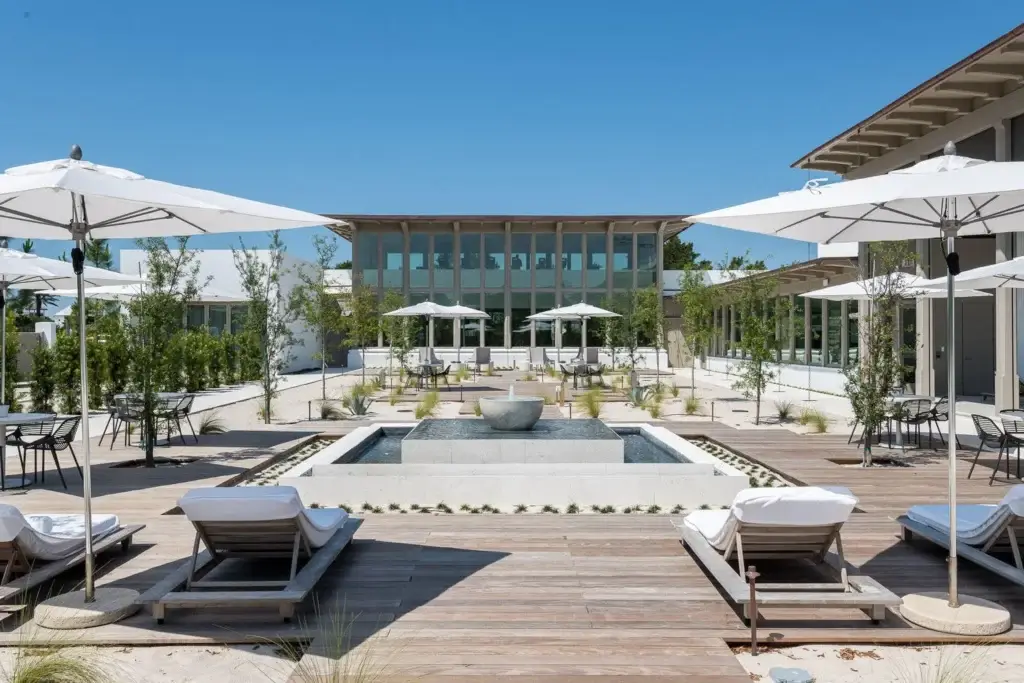
The white courtyard walls and Antiguan architecture attract attention, but the true barrier to entry is not aesthetic. It is financial infrastructure. Alys Beach restricts access through layered fees, construction standards that compound insurance savings, and governance mechanisms that prioritize long-term asset protection over individual autonomy. If you are weighing this community against others on the corridor, understanding the real value differences on 30A is essential context.
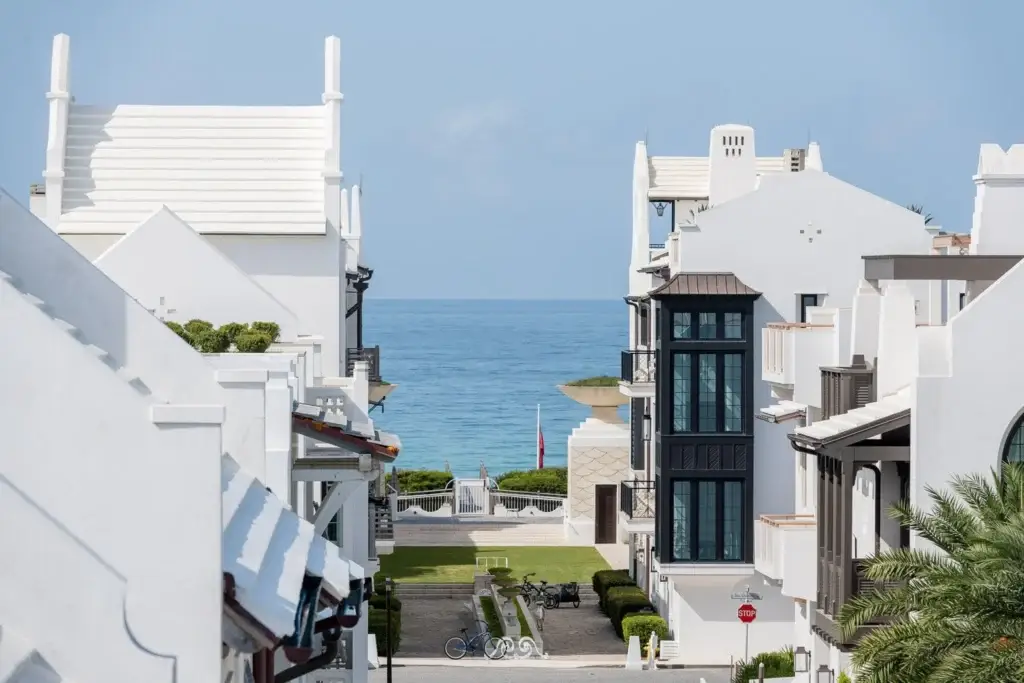
Alys Beach Fee Structure Breakdown (2026)
Buyers face upfront capital contributions, recurring HOA assessments, and transaction-based foundation fees that collectively add $45,000+ to closing costs on a median home purchase before the first mortgage payment.
| Fee Type | Amount | Frequency | Notes |
|---|---|---|---|
| HOA Dues (Standard Residential) | $3,097* | Quarterly | *Average for standard 40×80 courtyard lot |
| Capital Contribution Fee | $30,000 | One-time | Due at closing (Non-refundable) |
| Foundation Fee | 0.5% of Price | One-time | $15,000 on a $3M home |
| Beach Club / Zuma Access | Included | Owner-exclusive | No outside memberships available |
| Rental Management | 40% of Gross | Per Booking | Mandatory in-house program |
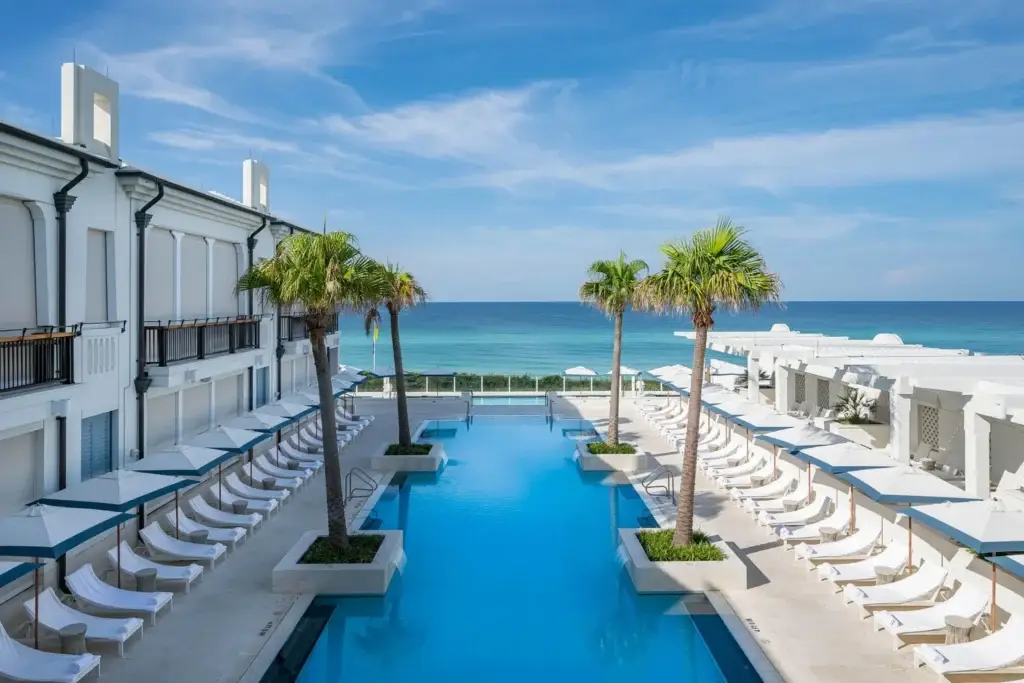
Alys Beach vs. Rosemary Beach: The Lifestyle Difference
While living in Rosemary Beach offers high-velocity rental income and a bustling town center, living in Alys Beach prioritizes privacy and exclusivity. Alys owners pay higher upfront fees (0.5% foundation fee + $30k capital contribution) to ensure a quieter, “owners-first” environment. If you want maximum rental liquidity, look at Rosemary. If you want a fortified legacy asset, look at Alys. For a more detailed side-by-side, read our Rosemary Beach vs. Alys Beach comparison.
| Category | Rosemary Beach | Alys Beach |
|---|---|---|
| Rental Model | High-velocity weekly turnover | Mandatory in-house management at 40% of gross |
| Architectural Control | Allows variation in design | Enforces white stucco uniformity |
| Town Center | Commercial retail and restaurants | Curated, low-traffic amenities |
| Construction | Mix of frame and masonry | Mandates IBHS Fortified standards |
| Management Flexibility | Third-party and self-management permitted | In-house program only, no outside managers |
The financial trade-off is explicit. Rosemary delivers higher gross rental yields (often 6-8% of property value) with the flexibility to shop competitive management fees. Alys delivers lower insurance premiums and long-term architectural preservation, but the mandatory 40% management fee compresses net rental income significantly. Buyers exploring this end of the corridor should also understand how Inlet Beach compares to Rosemary Beach for a broader value perspective.
The Hidden Variable: Certain deeds require specific club memberships with initiation fees exceeding $60,000. Verify deed restrictions before closing. The Zuma Wellness Center and Beach Club access are exclusive to owners and registered rental guests. There is no path to membership for non-owners, regardless of price.
Capital Contribution Reality: The $30,000 capital fee is often buried in closing documents. Unlike HOA dues, this fee does not accrue interest, does not transfer with resale, and provides no individual owner equity. It functions as a community infrastructure subsidy paid by each new buyer.
Taxes and Financials: Walton County Property Taxes
Walton County, Florida maintains one of the lowest county millage rates in the state. For FY2026, the Board of County Commissioners set the county millage at 3.575 mills, down from 3.6 the prior year. However, property owners pay into multiple taxing authorities: county, school district, fire services, mosquito control, and water management district. The combined effective rate for Alys Beach properties runs approximately 10 mills when all taxing authorities are included.
Property Tax Example (Based on Actual Alys Beach Tax Records)
A 4-bedroom, 2,656 sq ft Alys Beach home assessed at approximately $4,000,000 paid $39,653 in total property taxes for 2025. Scaled to a $5,000,000 assessed value, expect an annual tax bill in the range of $49,000-$50,000.
These figures can shift as assessed values increase. Walton County property values increased 13.3% in 2025 alone. Buyers should model for continued assessment growth as 30A development sustains demand. Current assessed values and tax estimates are available through the Walton County Property Appraiser’s tax estimator tool.
Tax Efficiency vs. South Florida: Unlike communities with Community Development District (CDD) bonds adding $3,000-$8,000/year, Alys Beach avoids bond assessments. The primary advantage remains Florida’s no-income-tax status and the homestead exemption (up to $50,000 off assessed value for primary residents). More on the homestead exemption is available through the Florida Department of Revenue.
Investment Potential: Rental Rules and ROI
Alys Beach operates under a dual market: primary residents seeking privacy and investment buyers seeking rental yield. The HOA permits short-term rentals but controls the entire rental operation through its mandatory in-house management program. Understanding the full picture of living on 30A full-time helps frame how the rental economy impacts permanent residents here.
Rental Performance Metrics
| Metric | Low Season (Jan-Feb) | Shoulder (Mar-May, Sep-Nov) | Peak Season (Jun-Aug) |
|---|---|---|---|
| Average Daily Rate (ADR) | $691 | $750 – $780 | $816+ |
| Occupancy Rate | 26% | 45% – 52% | 60% |
| Est. Monthly Revenue | $5,400 | $11,250 | $14,700 |
Annual Gross Potential: $120,000-$145,000 for a 3-bedroom, 2,500 sq ft home.
After the mandatory 40% management fee, that $120,000-$145,000 gross drops to $72,000-$87,000 before property taxes, insurance, HOA fees, and maintenance. Net cash flow on a $3M+ asset is thin.
Architecture and Fortified Construction Standards
Every Alys Beach home complies with IBHS Fortified standards, requiring masonry construction, concrete roof tiles, and impact-rated glazing. This is not an optional upgrade. It is mandated by the Architectural Review Board (ARB) and embedded in deed covenants.
Construction Requirements
Exterior Walls: 8-inch CMU block with stucco finish. Roof System: Concrete tiles over reinforced structure. Windows/Doors: Impact-rated glass or shutters on all openings. Foundation: Engineered piling systems for flood mitigation.
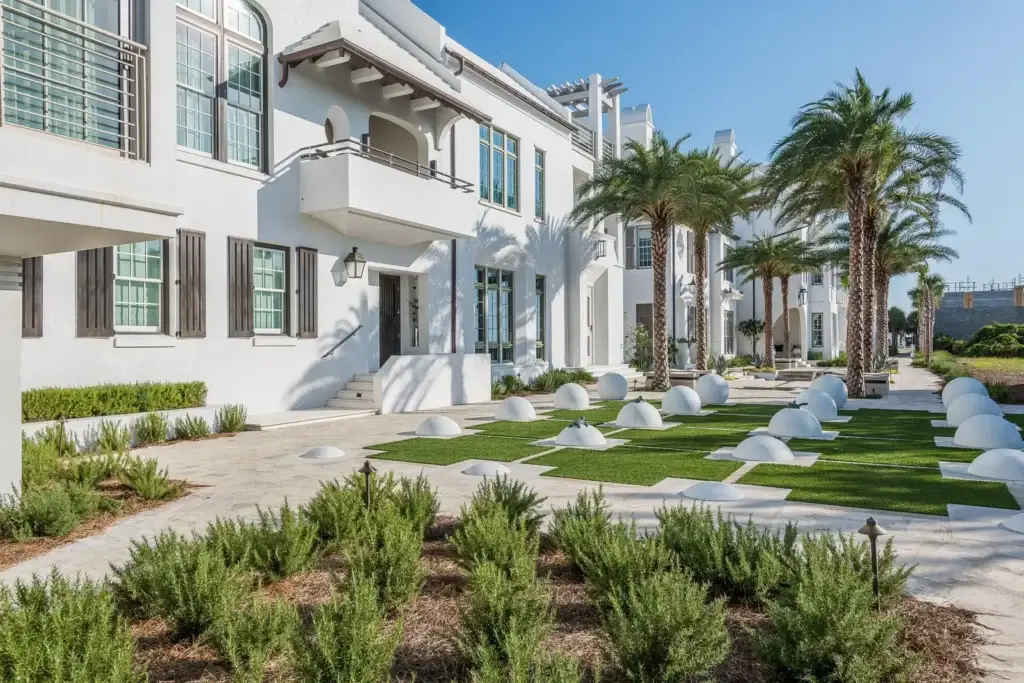
Insurance Savings: The Financial Benefit
Fortified construction reduces Wind/Hail premiums by 30-50% compared to frame homes in adjacent communities. A $3M Alys Beach home typically insures for $8,000-$12,000/year, while an equivalent frame structure in Seaside or Grayton Beach costs $15,000-$22,000/year. For context on Florida’s insurer of last resort and how it impacts coastal property owners, see Citizens Property Insurance.
The Architectural Review Board (ARB)
The ARB enforces aesthetic uniformity with authority to reject paint color modifications, courtyard landscaping changes, exterior lighting additions, satellite dish installations, and roof-mounted solar panels (in most cases).
Approval Timelines: 30-60 days for minor modifications. 90-120 days for major structural changes. Budget 8-12 weeks into any renovation timeline for ARB review.
This level of control is not a bug. It is the system functioning as designed. Aesthetic uniformity protects long-term property values at the expense of individual customization. Buyers coming from communities like WaterColor, which balances design standards with more flexibility, find Alys Beach’s restrictions significantly more rigid.
Logistics: Aviation, Internet and Daily Life
High-net-worth residents prioritize connectivity and aviation access. Alys Beach delivers fiber internet infrastructure but requires flexibility on private aviation routing due to limited regional FBO capacity. For full driving routes and commercial flight options, see our guide to getting to 30A.
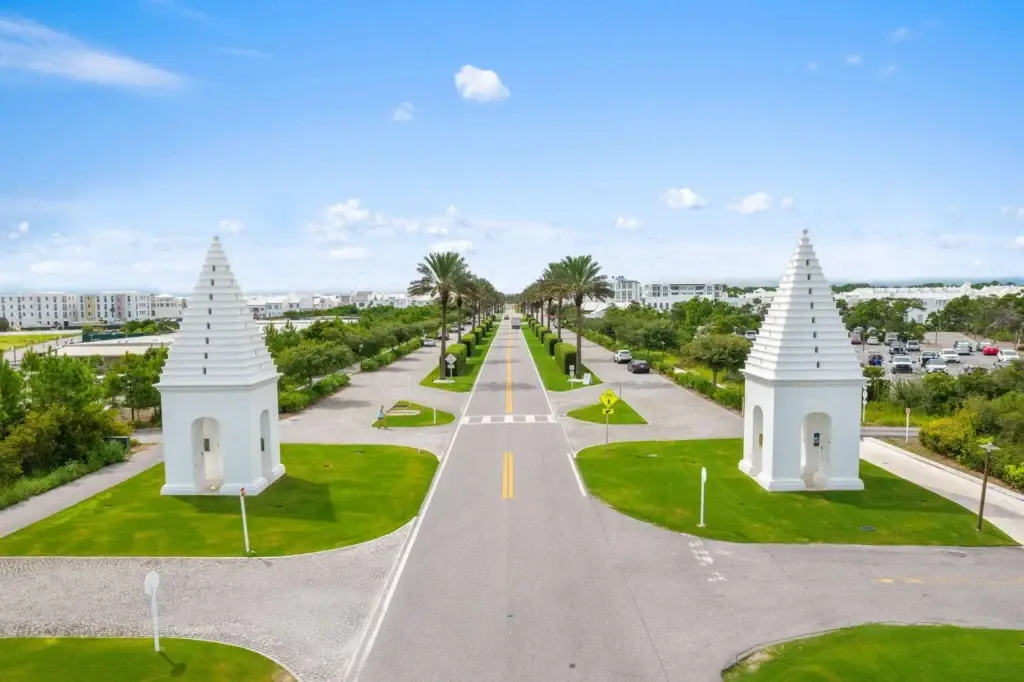
Private Aviation Options
Northwest Florida Beaches International Airport (ECP) Distance: 25 minutes via 30A and Highway 79. FBOs include Sheltair Aviation and Southern Sky Aviation. The 10,000-foot runway accommodates mid-size jets. Best for quick weekend trips with minimal ground time.
Destin-Fort Walton Beach Airport (DTS) Distance: 45-60 minutes (traffic-dependent). FBO: Destin Jet Center. The 6,000-foot runway limits aircraft size. Best for smaller jets and turboprops.
No dedicated airstrip serves Alys Beach. Owners requiring frequent private aviation typically position aircraft at ECP and arrange ground transportation.
Internet and Connectivity
Alys Beach provides fiber-to-the-home connectivity through AT&T Fiber and regional providers. Minimum speeds: 1 Gbps symmetrical. This infrastructure supports remote work requirements for executive residents managing operations across time zones. Our 30A relocation guide covers internet providers and utility setup across the corridor.
Privacy and Photography Policy
Security personnel enforce strict photography restrictions. Commercial photography, influencer content creation, and wedding photography require advance HOA approval. Residents who value anonymity consider this a primary advantage. Alys Beach does not permit the casual social media tourism that saturates Seaside and WaterColor.
Enforcement Mechanism: Roving security identifies unauthorized photographers and issues immediate removal notices. Violations can result in fines and trespass warnings.
The Cons: What Residents Actually Complain About
Alys Beach markets exclusivity, but operational realities create friction between primary residents and the rental economy that sustains property values.
The “Resort” Phenomenon
From Memorial Day through Labor Day, the Caliza Pool, Fonville Press, and Amphitheater function as high-occupancy resort amenities. Owners report 30-45 minute waits for pool chair access, amplified noise levels through August, and parking congestion near beach access points.
The “neighborhood” atmosphere returns in October when occupancy drops below 30% and primary residents reclaim communal spaces. Timing a visit outside peak season makes a significant difference, and our best time to visit 30A guide breaks down the trade-offs month by month. This seasonal dynamic is consistent across most of 30A’s premium communities, though Alys Beach’s smaller footprint concentrates the impact.
Construction Noise and Development Timeline
Alys Beach remains approximately 65% built out as of 2026. Ongoing construction means crews starting work at 7:00 AM (county permit allowance), truck traffic on Caliza Lane and interior streets, and intermittent road closures for utility work.
Buildout Projection: Full development completion is estimated for 2029-2031, assuming sustained demand and construction capacity.
Parking and Vehicle Constraints
Alys Beach courtyards were designed for European-sized vehicles. Full-size SUVs (Suburbans, Escalades, Grand Wagoneers) barely fit in standard garages. Two-car garages often accommodate only one large vehicle. Street parking is prohibited, and enforcement uses immediate towing.
Solution: Many owners lease secondary vehicles (sedans, crossovers) specifically for Alys Beach use, parking their primary SUVs in off-site storage.
HOA Governance and Autonomy
The ARB operates as an architectural dictatorship, by design. Owners accustomed to unilateral control over their property find the approval process restrictive. A request to replace white courtyard pavers with gray pavers: denied. A request to install exterior uplighting on a home facade: denied. A request to plant non-native palm species: denied.
This is not a bug. It is the system functioning as designed. Aesthetic uniformity protects long-term property values at the expense of individual customization. Communities like WaterColor and Watersound offer governance that is strict but noticeably more flexible than what Alys Beach enforces.
Who Should Buy in Alys Beach?
Alys Beach suits three buyer profiles.
Profile 1: The Primary Resident Executive
Remote CEO, business owner, or professional with location flexibility. Priorities: privacy, architectural quality, fiber connectivity. Financial comfort with $100,000+/year in property taxes and HOA fees.
Profile 2: The Legacy Asset Holder
Long-term hold (10+ years) with a family compound mentality. Priorities: architectural permanence, limited commercial tourism, controlled access. Often purchased through LLC or family trust. Rental income is a secondary consideration, not a driver.
Profile 3: The Insurance Arbitrage Investor
Existing coastal portfolio with exposure to volatile insurance markets. Priorities: Fortified construction standards that lock in private carrier access and reduce Wind/Hail premiums by 30-50%. Treats the property as a long-term appreciation play with modest rental offset, not a cash-flow vehicle.
Who Should Avoid Alys Beach
Buyers seeking short-term flips will face an illiquid market with high transaction costs. Buyers requiring vehicle customization or RV parking will find no accommodation. Buyers uncomfortable with governance restrictions will experience ongoing friction. Buyers expecting resort-style amenities without resort-level crowding during peak season will be disappointed.
Buyers treating rental income as a primary return driver will find the mandatory 40% management fee, combined with $12,000+ in annual HOA fees and property taxes, compresses net yields well below what Rosemary Beach, WaterColor, or even Inlet Beach can deliver with competitive third-party management options.
If Alys Beach is more restriction than you need, explore communities on 30A’s west end. Grayton Beach offers a completely different ownership philosophy, and the Seagrove vs. Grayton Beach comparison covers two of 30A’s most relaxed neighborhoods.
Frequently Asked Questions
What are the HOA fees in Alys Beach for 2026? Quarterly HOA fees average $3,097 for standard residential lots, totaling approximately $12,388 per year. New buyers also pay a one-time $30,000 capital contribution fee and a 0.5% foundation fee on the purchase price at closing.
Can you use a third-party rental manager or self-manage in Alys Beach? No. Alys Beach requires all rental properties to go through the community’s in-house management program, which charges approximately 40% of gross bookings. Third-party management companies and self-management through platforms like Vrbo or Airbnb are not permitted. This policy is designed to maintain service standards and limit rental density within the community.
Is the Alys Beach Club private? Yes. The Beach Club, Zuma Wellness Center, and Caliza Pool are exclusive to property owners and their registered rental guests. No outside memberships are available at any price point.
How do Alys Beach property taxes compare to other 30A communities? All 30A communities fall within Walton County, Florida, so the same taxing authorities apply across the corridor. The combined effective rate runs approximately 10 mills when county, school district, fire services, and other districts are included. The difference lies in assessed values. Alys Beach properties typically assess higher per square foot than Seagrove or Grayton Beach, resulting in larger absolute tax bills despite identical millage rates. A 2,656 sq ft Alys Beach home assessed at $4,000,000 paid $39,653 in total property taxes for 2025.
What is the rental income potential in Alys Beach? A 3-bedroom home grosses $120,000-$145,000 annually through the mandatory Alys Beach management program, with occupancy rates of 26% (winter) to 60% (summer). After the required 40% management fee, operating costs, and reserves, net yields range from 2-4% of property value. That is significantly lower than what neighboring communities with competitive third-party management can deliver.
Does Alys Beach allow short-term rentals? Yes, but with significant restrictions. All rentals must go through Alys Beach’s in-house management program at 40% of gross. Some streets enforce 30+ day minimum stays, and properties near the nature preserve may prohibit short-term rentals entirely. Verify deed restrictions before purchasing with rental income assumptions.
Summary: The Financial Reality
Living in Alys Beach requires accepting that architectural control, insurance advantages, and long-term value preservation come at the cost of autonomy, rental flexibility, and immediate liquidity. This is not a community for buyers seeking personalization, strong rental cash flow, or rapid appreciation. It is a compound designed for multi-decade holds by families and investors who prioritize permanence over flexibility.
Total First-Year Ownership Cost (Example)
| Line Item | Amount |
|---|---|
| Purchase Price | $3,000,000 |
| Capital Contribution | $30,000 |
| Foundation Fee | $15,000 |
| Closing Costs (est.) | $60,000 |
| Year 1 HOA Fees | $12,388 |
| Year 1 Property Taxes | $30,000 |
| Year 1 Insurance | $10,000 |
| Total Year 1 Outlay | $3,157,388 |
The $30,000 property tax figure is proportional to the real tax data: $39,653 on a $4M assessment scales to roughly $30,000 on a $3M property.
For buyers with $3M+ liquidity and a 10+ year hold horizon, Alys Beach delivers what it promises: a fortified, architecturally controlled coastal enclave with insurance efficiency and long-term appreciation potential. For buyers expecting meaningful rental income to offset carrying costs, the mandatory 40% management fee and operational restrictions make the math difficult. Other 30A communities will serve that goal far better.
Your Next Move
The data above is general market intelligence, but every street in Alys Beach has a different rental profile and privacy index. If you are considering moving capital into 30A, you need a localized pro forma, not just a blog post. Contact me today to discuss which specific lots maximize the “Fortified” insurance savings and which streets avoid the rental traffic. Let’s run the real numbers.
850-585-0642 | andy@livingon30aflorida.com

Pingback: The Real 30A Florida Guide: Towns, Truths & East vs. West
Pingback: 30A Beach Access: Public vs. Private Rules (2026 Guide)
Pingback: Getting to 30A: Closest Airports (ECP vs VPS) & Driving Routes
Pingback: South of 30A vs. North of 30A: Real Costs, Value & Data (2026)
Pingback: Living in Seaside FL: True Costs, HOA Rules & Reality (2026)
Pingback: Living in WaterColor FL: The Real Cost, Rules & Districts (2025)
Pingback: Living in Grayton Beach, FL: Costs, Pros & The “Strange” Truth