

Choosing between Seagrove Beach and Grayton Beach is one of the most common comparisons buyers make if they are fans of the “Old Florida” feel of these communities along the central portion of 30A. These two communities sit less than three miles apart, yet they attract completely different buyers for completely different reasons. In 2026, the gap between them has widened in ways that matter to both lifestyle buyers and investors.
Seagrove Beach vs. Grayton Beach: What the 2026 Market Actually Looks Like
Seagrove Beach and Grayton Beach each represent a distinct version of “authentic 30A.” Grayton commands a scarcity premium driven by limited inventory and its Residential Preservation Area designation, with active listings averaging around $1,300 per square foot. Seagrove offers a wider price range, newer infrastructure, and broader rental flexibility, making it the stronger entry point for ROI-focused buyers in 2026.
If you’re still getting oriented to how 30A is organized overall, start with our complete 30A guide before diving into community-level comparisons. And if you’re weighing these two communities against others on 30A, our breakdowns of Seaside vs. WaterColor and Inlet Beach vs. Rosemary Beach give you the full picture.
At a Glance: Seagrove Beach vs. Grayton Beach
| Feature | Seagrove Beach | Grayton Beach | Winner |
|---|---|---|---|
| Typical Price Range | $350K to $20M+ | $1.25M to $18M+ | Seagrove (wider entry point) |
| Price Per Sq Ft | $700–$900 (newer builds) | ~$1,300 (active listings) | Seagrove |
| HOA Governance | Patchwork (varies by subdivision) | None (county overlay district applies) | Depends on buyer preference |
| Short-Term Rentals | Allowed in most areas (verify by subdivision) | Generally allowed (no HOA to restrict) | Draw |
| Flood Exposure | Mixed zones; newer builds often better rated | More AE/VE exposure in village core | Seagrove (generally) |
| Beach Parking | Santa Clara Regional Access (30 spaces) + private deeded | Village access + county shuttle in peak season | Draw |
| Beach Driving | Not available | Available (permit required, lottery-based) | Grayton (unique to 30A) |
| Inventory | More active listings; broader selection | Low and historically constrained | Seagrove (buyer’s perspective) |
| Vibe | Residential, central, family-friendly | Artistic, independent, Old Florida | Personal preference |
How Much Does a Home Cost in Seagrove vs. Grayton Beach?
As we move through 2026, inventory across 30A has loosened modestly compared to the tight pandemic-era market, but pricing in both Seagrove and Grayton has held firm. To understand why, you need to understand the supply side of each community. For additional context on how location within the corridor affects value, see our breakdown of south of 30A vs. north of 30A.
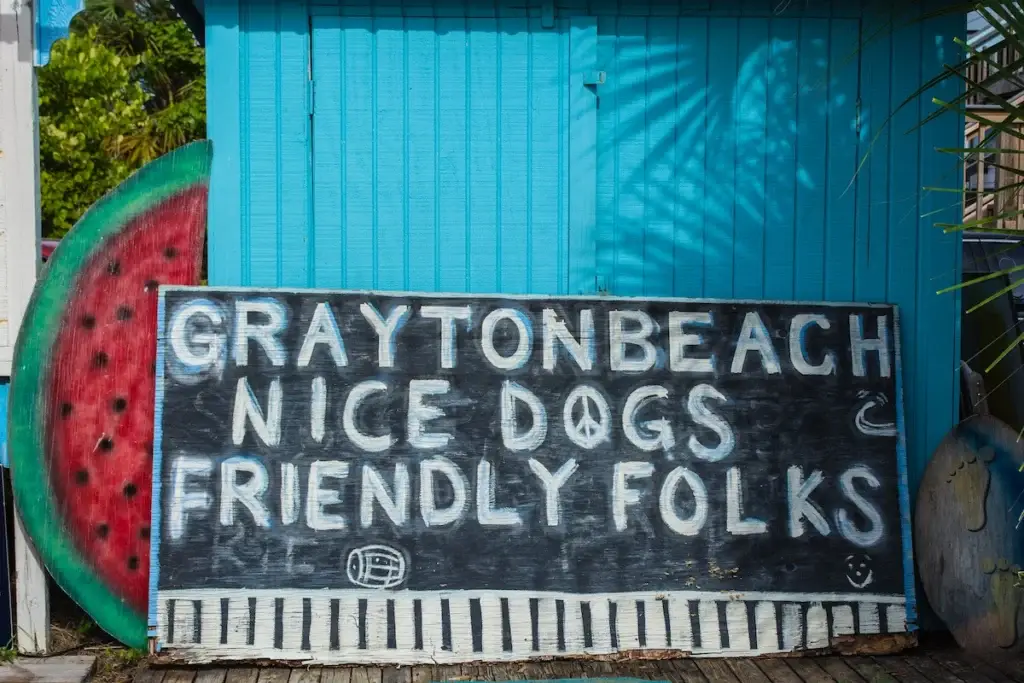
Grayton Beach: A Market Built on Scarcity
Grayton’s pricing reflects one core reality: there is almost no room to build, and what does get built is tightly regulated. The community sits within a Residential Preservation Area under Walton County’s Grayton Beach Neighborhood Plan, which limits density, controls scale, and constrains what new development looks like. The result is a market where inventory turns over rarely and prices stay elevated.
What buyers are seeing in 2026: renovated cottages south of 30A in the village core are trading between $2.8M and $4.8M. Newer construction north of 30A starts closer to $1.25M, representing a meaningfully different entry point than the historic village. Gulf-front estates run from $6M to over $18M. The median price per square foot for active Grayton listings is currently around $1,300.
The point worth internalizing: you are not paying for square footage in Grayton. You are paying for position in a neighborhood that cannot physically expand to meet demand.
Seagrove Beach: The Full Spectrum
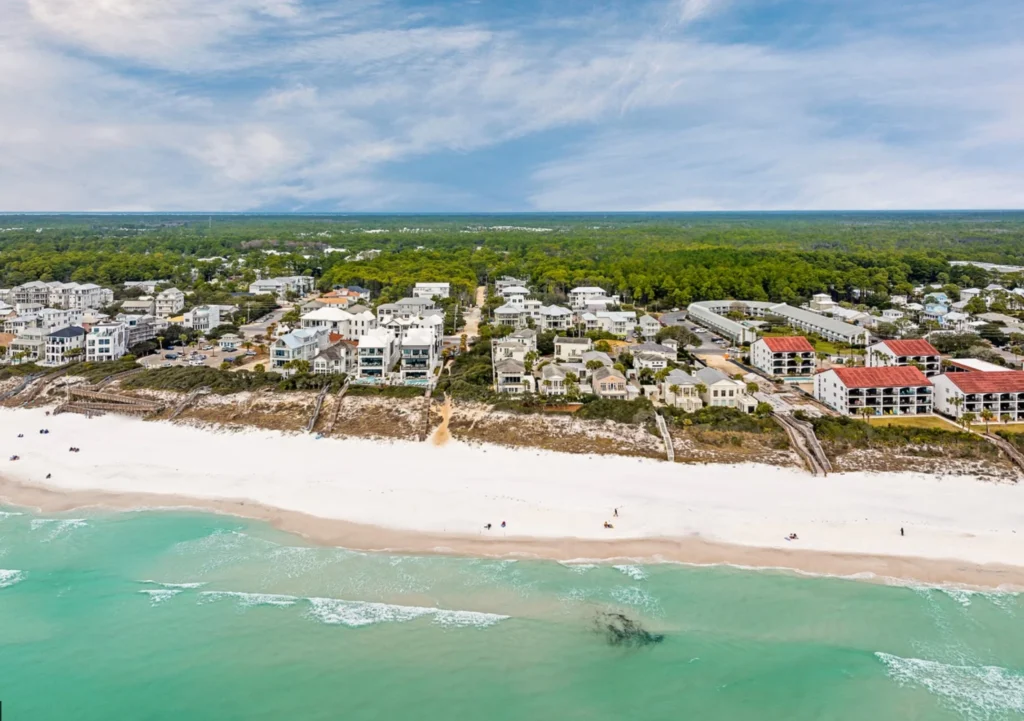
Seagrove is arguably the most geographically diverse stretch on all of 30A. The 1.5-mile corridor runs from entry-level condos to some of the corridor’s most valuable gulf-front estates, and the price range reflects that.
What buyers are seeing in 2026: condos and villas range from $350K to over $3M. Single-family homes north of 30A run from $650K to $5M+. South of 30A legacy estates range from $1.15M to over $20M. Newer construction is generally priced between $700 and $900 per square foot.
For buyers prioritizing modern systems, lower insurance premiums, and better rental infrastructure, Seagrove consistently delivers more square footage per dollar than Grayton’s historic village core. That gap is meaningful when you’re calculating long-term carrying costs and rental performance.
The Governance Divide: HOAs, Preservation Rules, and What They Mean for Buyers
This is where many buyers get surprised, and where the due diligence requirements for each community diverge significantly.
Grayton Beach: No HOA, But Not Without Rules
Grayton Beach is genuinely HOA-free, which is one of the primary reasons it attracts a specific type of buyer. There are no associations controlling paint colors, landscaping, or short-term rental activity. But the absence of an HOA does not mean the absence of governance.
Walton County adopted the Grayton Beach Neighborhood Plan to preserve the residential and historic character of the neighborhood while respecting individual property rights. The plan operates as an overlay district, layering neighborhood-specific development standards on top of standard county zoning. The overlay governs building scale and height, setbacks, parking placement, signage, and alley use. Alleys in Grayton are required to remain unpaved and reserved for residential access. These are not arbitrary restrictions: they are what keeps Grayton from looking like everywhere else on the Emerald Coast.
A few details worth knowing before you buy. Nonconforming structures can generally continue to be used as-is, and if destroyed by causes outside the owner’s control, can typically be reconstructed as vested. This matters for older cottages that predate current code. Florida law also allows counties to offer property tax exemptions on the increased value from approved rehabilitation for qualifying historic properties. Whether a specific Grayton parcel qualifies requires verification through the Florida Division of Historical Resources and Walton County’s planning department.
Before designing any substantial renovation in Grayton, have a land-use attorney review the Grayton Beach Neighborhood Plan overlay language, found in Chapter 8 of Walton County’s land development code, against the specific parcel you’re considering. Do not assume that “no HOA” means no process.
The practical day-to-day reality: neighbors can park boats in yards, aesthetics vary by block, and the village retains a genuinely unpolished character. That is a feature for the right buyer and a dealbreaker for others. For the full picture on daily life in the community, our deep dive on living in Grayton Beach covers the on-the-ground realities in more detail.
Seagrove Beach: Due Diligence Varies by Street
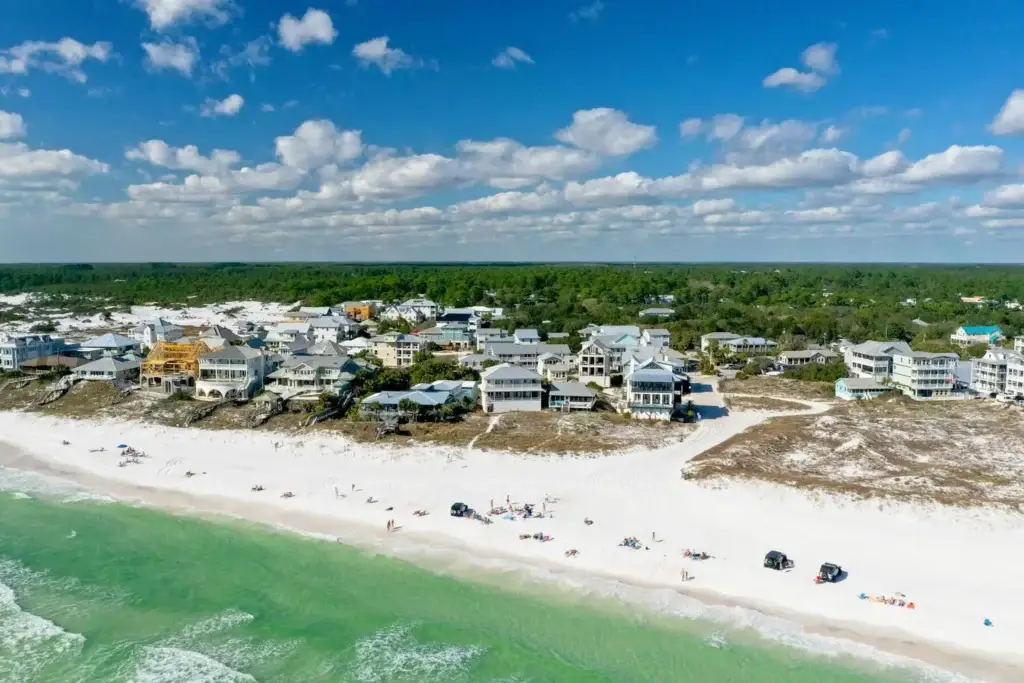
Seagrove has no overarching community governance. Individual subdivisions operate under their own HOA rules, or none at all. Some Seagrove communities have architectural standards and may restrict short-term rentals. Others have no restrictions whatsoever.
If rental income is part of your investment plan, this is not a detail to sort out after closing. Pull the CC&Rs and any applicable HOA documents during due diligence, and verify the specific rental status of the property or subdivision before you make an offer.
Insurance and Flood Zones: The Number That Changes Your Budget
Flood insurance is a material cost across all of 30A, and both Seagrove and Grayton have meaningful flood exposure. The key distinction is not community vs. community: it is zone vs. zone. Your insurance costs will be determined by the flood zone designation of the specific parcel, not the neighborhood name. A broader look at how this plays into the full cost of ownership is covered in our 30A relocation guide and our look at living on 30A full-time.
Grayton Beach’s village core has a higher concentration of older, pre-FIRM structures situated in AE and VE flood zones. These homes were built before modern elevation requirements and can carry insurance premiums that significantly affect annual carrying costs. Newer construction north of 30A in the Grayton area is generally better positioned on this front.
Seagrove has a mix of flood zones as well, but newer construction has generally been built to current elevation requirements, which can translate to more favorable insurance ratings. Do not assume Seagrove automatically means lower insurance: verify the specific zone and structure elevation certificate on any parcel before closing.
CBRS Zone Awareness for Both Communities
Certain parcels near the coastal lakes in this stretch of 30A fall within Coastal Barrier Resources System (CBRS) units or Otherwise Protected Areas (OPAs) under federal law. The officially mapped CBRS units near Seagrove and Grayton include Deer Lake (FL94), Draper Lake (FL96), and the Grayton Beach OPA (FL-95P). Properties within these boundaries are ineligible for federal flood insurance and require private coverage, which can be significantly more expensive.
Do not rely on generalized descriptions of which lakes are “in COBRA.” The only reliable verification method is checking a specific parcel against the current FEMA/CBRS maps at the parcel level. Walton County’s Floodplain Management office can assist with this. For a broader look at how coastal zone rules affect 30A buyers across the corridor, our 30A beach access guide provides useful context.
Beach Access and Summer Crowds: The July 4th Test
The honest way to evaluate beach access is not a quiet Tuesday in February. Come back on a July 4th weekend and see how each community handles volume. For a broader look at how seasonality plays out across all of 30A, our seasonal guide to visiting 30A is worth reviewing before you plan any scouting trip.
Grayton Beach: The Shuttle Reality
Grayton’s street layout was designed for an era that predated modern traffic volumes. During peak summer weeks, the village becomes genuinely difficult to navigate by car. Walton County operates a free shuttle system during peak season that most locals and savvy visitors rely on rather than fighting for street parking.
The beach driving permit is Grayton’s most distinctive feature: it is the only location on all of 30A where vehicles are allowed on the sand. Permits are available only to Walton County residents and property owners with a 4×4 vehicle registered in their name. The county issues 150 standard beach driving permits per year through an annual lottery, typically held in May, at $135 per permit annually. Grandfathered long-time permit holders can renew without entering the lottery, but if they ever let a permit lapse, they lose that status permanently. Vacation renters are not eligible for any category of beach driving permit.
The practical reality for most buyers: beach driving access is a meaningful lifestyle perk if you qualify and win the lottery. It is not a guaranteed feature of ownership.
One more consideration worth naming directly: Grayton is home to The Red Bar, one of the best-known bars on the Gulf Coast. If your property sits within a couple of blocks, Friday and Saturday nights are lively. For buyers prioritizing quiet, look toward the streets bordering Grayton Beach State Park.
Seagrove Beach: Santa Clara and Private Deeded Access
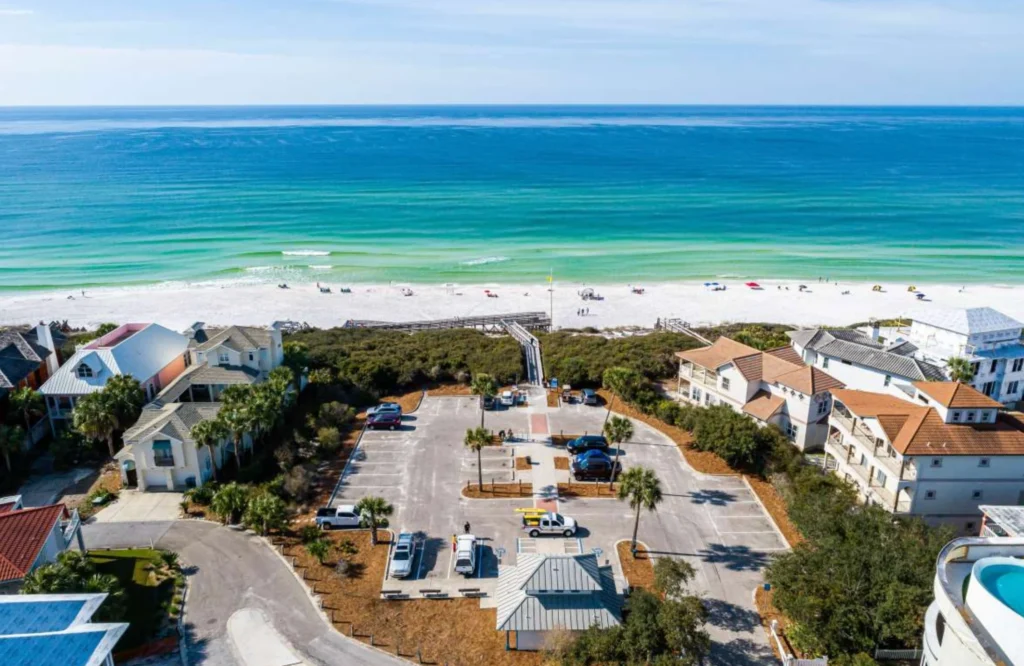
Seagrove’s main public beach access point is Santa Clara Regional Access, which offers approximately 30 parking spaces along with restroom facilities. In peak summer months, those spaces fill early in the morning. For buyers counting on public access as their primary beach solution, plan to arrive very early or accept that access is competitive.
The practical solution for most Seagrove buyers is deeded private beach access. South-of-30A properties in Seagrove frequently include private dune walkovers or community access points that bypass the public parking situation entirely. If beach access without the hassle is a priority, the premium for a south-of-30A property with private access often pays for itself in lifestyle quality. For more on how private beach access works across the corridor, see our full 30A beach access guide.
Seagrove’s central location is a genuine advantage for buyers who want to reach both ends of 30A without a long drive. That said, during summer Saturdays the stretch of 30A near the Seaside border can back up significantly: a two-mile drive can take 30 minutes or more at peak times. Factor that into your daily lifestyle picture. For buyers arriving from out of state, our guide to getting to 30A covers the regional airports and driving routes.
Investment Potential: Rental Rules and ROI
Both Seagrove and Grayton Beach support active short-term rental markets, and neither community restricts vacation rentals at the community level. The meaningful difference between them is how each community’s property mix affects your rental ceiling and your acquisition cost.
Rental performance in both communities is driven primarily by proximity to the gulf, property size, and the quality of finishes and amenities. For non-gulf-front properties in either community, well-positioned homes can generate roughly $50,000 to $115,000 per year in gross rental revenue, depending on size and features. Gulf-front properties in both communities have the potential to exceed $200,000 annually. Occupancy rates across both communities tend to run between 55% and 70% on an annual basis.
The structural advantage Seagrove holds for rental investors is its price spectrum. Entry points are lower, the new-construction supply is larger, and modern builds with open floor plans and resort-style features perform well with the multi-family vacation rental market. Grayton properties can be strong performers too, particularly well-positioned cottages with character that stand out in listing photos, but the higher acquisition cost raises the bar for a meaningful net ROI.
For Seagrove buyers, the critical rental due diligence step is confirming the rental status of the specific subdivision or property. While most of Seagrove allows short-term rentals, individual HOA documents may contain restrictions. Confirm this during your inspection period, not after closing.
Management fees on 30A typically run in the 10% to 20% range for full-service property management, and that cost should be built into any pro forma analysis before you make an offer. For buyers comparing these communities to the investment profile of the east end, our guides to living in Rosemary Beach and Rosemary Beach vs. Alys Beach give you the east-end benchmark for context.
The Verdict: Seagrove Beach or Grayton Beach?
There is no universal answer here, and anyone who tells you otherwise is selling something.
Choose Grayton Beach if…
You want to own a piece of 30A history and you value independence over uniformity, you’re drawn to the artistic community character, and you understand you’re buying a premium position in a market that cannot expand. You’re not primarily ROI-driven, or you’ve identified a specific property whose location and character justify the acquisition cost on its own terms.
Choose Seagrove Beach if…
You want geographic flexibility, a wider selection of property types, and a more accessible entry point into the 30A market. You’re focused on rental performance, you want modern systems that minimize maintenance friction, and you value being centrally positioned on the corridor. Seagrove is the more practical choice for buyers who need 30A to work as an investment first and a lifestyle property second.
Frequently Asked Questions
Can you buy in Grayton Beach and do a major renovation?
Yes, but the process has more steps than a standard renovation elsewhere on 30A. Grayton Beach sits within a Residential Preservation Area under Walton County’s Grayton Beach Neighborhood Plan, which functions as a zoning overlay with requirements around building scale, height, setbacks, and alley use. There is no blanket prohibition on extensive renovation or reconstruction, but your plans must comply with the overlay’s development standards. For any significant project, have a land-use attorney review the specific parcel against the overlay language in Chapter 8 of Walton County’s land development code before committing to a design.
Is Seagrove Beach good for short-term rentals?
Generally yes, but the answer depends on the specific property or subdivision. Seagrove does not have a community-wide rental ban, and most of the area supports active short-term rental activity. However, some individual communities and HOAs within Seagrove may restrict rentals. Treat this as a due-diligence item: pull the CC&Rs and HOA documents for any specific property before closing, and confirm the rental status with your agent during the inspection period, not after.
How does beach driving at Grayton Beach actually work?
Grayton Beach is the only location on all of 30A where vehicles are permitted on the sand. Access requires a Walton County beach driving permit, available only to Walton County residents and property owners with a 4×4 vehicle registered in their name. The county issues 150 standard permits per year through an annual lottery, typically held in May, at $135 per permit annually. Long-time grandfathered permit holders can renew annually without entering the lottery, but letting a permit lapse means losing grandfathered status permanently. Vacation renters are not eligible for any permit category.
Ready to Figure Out Which Community is Right for You?
The difference between Seagrove and Grayton comes down to street-level details: flood zones, specific HOA documents, rental performance by parcel, and which blocks actually deliver on the lifestyle you’re after.
That’s exactly what a Discovery Call is for.
Call/Text: 850-585-0642
andy@livingon30aflorida.com


Pingback: Inlet Beach vs. Rosemary Beach: Value vs. Brand (2026 Comparison)
Pingback: Getting to 30A: Closest Airports (ECP vs VPS) & Driving Routes
Pingback: South of 30A vs. North of 30A: Real Costs, Value & Data (2026)
Pingback: 30A Beach Access: Public vs. Private Rules (2026 Guide)