

If you’ve ever searched “30A Florida” and walked away more confused than when you started, you’re not alone. This guide cuts through the brochure language and gives you the real geography, town-by-town breakdown, and the lifestyle trade-offs nobody puts in the listing description.
Where is 30A Florida?
30A Florida is a 24-mile scenic corridor located in South Walton County along the Florida Panhandle. Situated between Destin and Panama City Beach, “30A” refers to a collection of iconic beach communities including Seaside, Rosemary Beach, and Grayton Beach. The area is famous for its rare coastal dune lakes, sugar-white sand beaches, and unique New Urbanist architecture.
The “Actual” Geography: What the Maps Don’t Show You
Here’s what most people miss: when you see those pristine maps showing a neat line of towns along the beach, you’re getting the Instagram version of 30A—not the logistical reality.
The US-98 vs. 30A Dynamic
County Road 30A runs parallel to—and south of—US Highway 98. This matters more than you think. While “30A” has become a lifestyle brand synonymous with coastal luxury, many properties marketed as “30A living” are actually north of Highway 98, closer to Choctawhatchee Bay than the Gulf of Mexico. You’ll see listings that say “30A area” or “minutes from 30A,” which translates to: “You’ll be crossing 98 to get to the beach.”
The scenic highway itself stretches roughly 24 miles, but the corridor people actually mean when they say “30A” extends several miles north. Understanding this distinction is crucial for buyers: south of 30A means Gulf views and beach access—but also higher insurance premiums, stricter building codes, and flood zone considerations. North of 30A might mean bay access, more space, and lower costs, but you’re trading that for the commute to the beach.
Read about getting to 30A — airports, driving routes, and distances.
The Choke Points
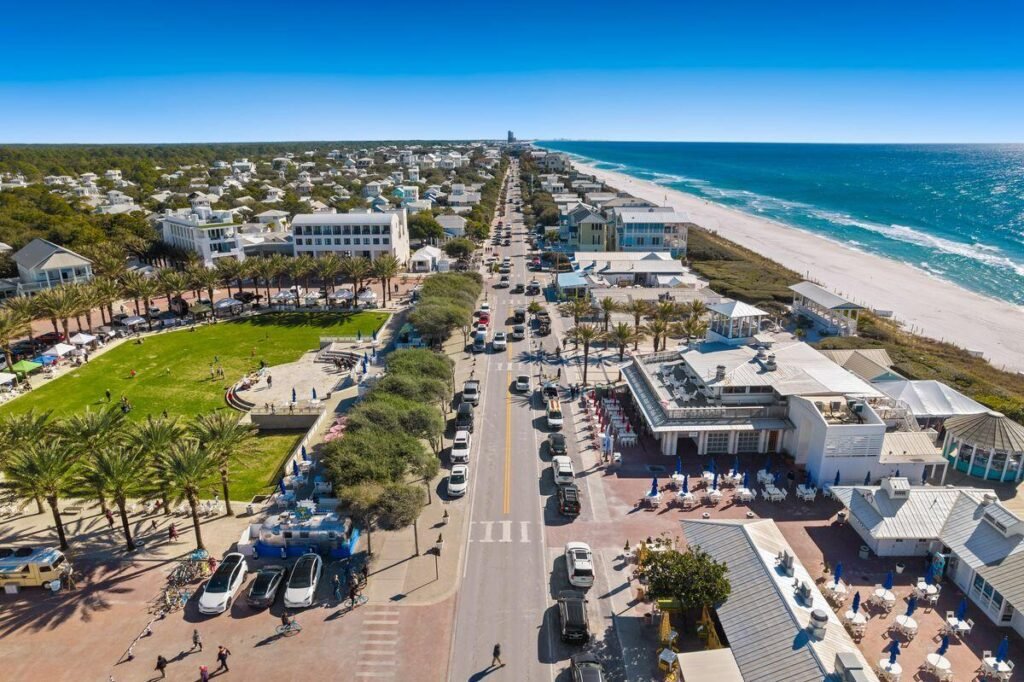
Unlike a typical beach road, 30A features narrow sections, roundabouts, and intentionally limited beach access points. During peak season, the two-lane road transforms into a rolling parking lot. The western sections near Grayton Beach State Park and the eastern stretches approaching Inlet Beach see particularly brutal backups during summer weekends. This isn’t a highway—it’s a scenic byway designed for golf carts and beach cruisers, not the volume of traffic it now handles.
East vs. West: The Personality Split Nobody Explains
Stop thinking of 30A as one unified community. The 24-mile corridor splits into two distinct personalities, and choosing between them is one of the most important decisions you’ll make.
East 30A: The Manicured Zone
Towns: Inlet Beach, Rosemary Beach, Alys Beach, Watersound, WaterColor
This is 30A’s “greatest hits” album—the master-planned communities that built the brand. Think New Urbanist architecture, walkable town centers, and HOAs with actual teeth. Everything here is intentional: the white stucco walls, the cobblestone courtyards, the precisely maintained landscaping.
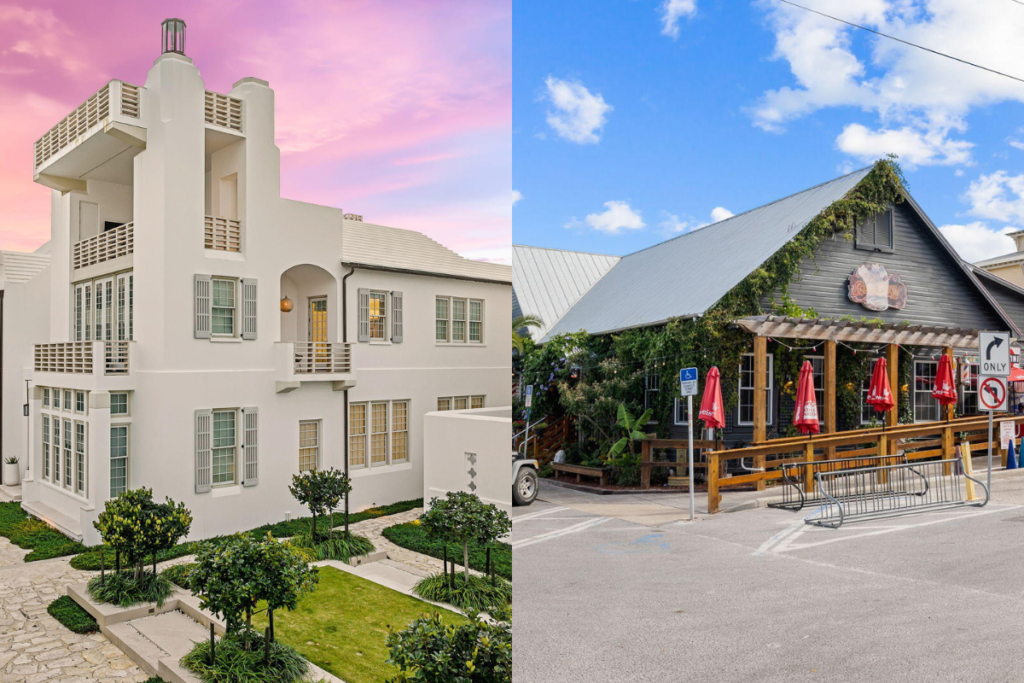
The Reality: You’re buying into a vision, which means strict architectural controls. Want to paint your shutters navy instead of black? You’ll need approval. Planning a backyard tiki bar? The architectural review board would like a word. These communities operate like sophisticated resorts—because many of them are. Rosemary Beach’s pedestrian-only town center, Alys Beach’s minimalist Mediterranean aesthetic, WaterColor’s amenity-rich campus: they’re designed experiences, not organic neighborhoods.
Who Thrives Here: People who value walkability over privacy, who want restaurants and shops within strolling distance, who appreciate the “scene” of outdoor concerts and food festivals. Families who want their kids to bike safely to the pool or beach club. Investors who recognize that rental demand peaks in these communities.
Read all about Seaside vs. WaterColor for families
Who Struggles Here: Anyone allergic to rules, people seeking solitude, or those who find the perfectly staged aesthetic a bit… Truman Show. If you’re the type who wants to park a boat in your driveway or add a screened-in porch without submitting three architectural drawings, look west.
West 30A: The Old Florida Zone
Towns: Grayton Beach, Blue Mountain Beach, Dune Allen, portions of Santa Rosa Beach
This is where 30A still feels like a secret. The west end predates the master-planned boom, which means fewer deed restrictions, more architectural variety, and a higher percentage of year-round residents who remember when 30A was just a back road to the beach.
Grayton Beach—officially Florida’s first “Five-Star Beach Town”—anchors this zone with its bohemian vibe. You’ll find weathered beach cottages next to modern glass boxes, artists’ studios tucked behind sand dunes, and The Red Bar, a legendary dive that embodies the anti-resort ethos. Blue Mountain Beach sits on one of the highest coastal elevations in Florida (65 feet—which counts as a mountain here), offering Gulf views without Gulf-front price tags.
The Reality: “Laid-back” also means fewer amenities within walking distance. You’ll drive more, plan more, and probably own a golf cart for beach runs. The west end has character, but character sometimes means older infrastructure, less frequent trash pickup, and neighbors who aren’t thrilled about the vacation rental explosion changing their community.
Who Thrives Here: People seeking authenticity over amenities, buyers who want more house for their money, locals tired of fighting tourists for parking. Anyone who values trees and privacy over town squares and poolside socializing.
Who Struggles Here: Those who need the structure and services of an HOA, families who want kids to walk everywhere safely, or anyone expecting resort-level maintenance and aesthetics.
East End or West End?
It’s your first decision on 30A. Let’s narrow it down.
30A East vs. West: A Quick Comparison
| Feature | East 30A (Rosemary, Alys, etc.) | West 30A (Grayton, Blue Mtn, etc.) |
|---|---|---|
| Vibe | Manicured, Resort-style, Upscale | Old Florida, Eclectic, Relaxed |
| Architecture | Uniform, New Urbanism, White Stucco | Varied, Cottages, Modern Mix |
| Density | High Density, Walkable Centers | Lower Density, Spread Out |
| HOA Control | Strict rules, high fees, enforced aesthetics | Minimal to moderate, more freedom |
| Rental Market | Peak demand, high income potential | Strong but seasonal, lower rates |
| Best For | Walking to dinner, “Scene” & Events | Nature, Privacy, Boat/Beach mix |
The Town-by-Town Breakdown: Decision-Making Data
Seaside
Learn what it’s really like to live in Seaside Florida.
30A’s Iconic Town: Seaside invented the modern 30A aesthetic. Built in the 1980s as America’s first New Urbanist town, it became famous as the filming location for “The Truman Show”—a fact that’s either charming or a bit too on-the-nose depending on your perspective.
Neighborhoods: Seaside doesn’t have traditional subdivisions; it has “neighborhoods” organized around five squares and the central amphitheater. The beach-side cottages command premium prices, while homes near the town center sacrifice views for walkability to Bud & Alley’s, Airstream Row, and the farmers market.
Rental Potential: Seaside has some of the most active vacation rental markets on 30A, with no minimum night requirements in most cases. However, noise ordinances are strictly enforced—your rental income potential comes with neighbor complaints about pool parties.
Price Range: Entry-level cottages start around $1.2M for non-Gulf-view properties. Gulf-front homes? Think $4M–$8M+. Condos in the Pavilion start around $600K but offer the lowest entry point.
Parking: Forget driving here on summer weekends. The central parking lot fills by 10 AM, and circling for a spot rivals trying to park at Disney World. Bike in, golf cart in, or arrive at dawn.
Local Tip: Seaside’s architecture review process can take 90+ days. Factor this into renovation plans.
Rosemary Beach
See our full breakdown of what it’s like to live in Rosemary Beach.
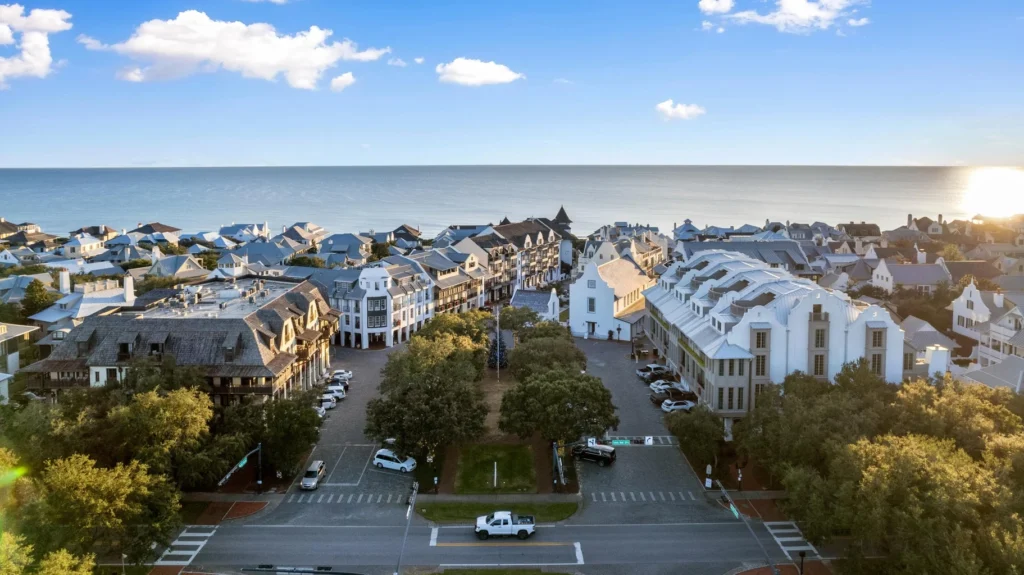
The Mediterranean Town of 30A: If Seaside is New England coastal, Rosemary Beach is the Mediterranean coast. Cobblestone streets, European-inspired architecture, and Barrett Square’s shops and restaurants create an immersive environment.
Neighborhoods: Rosemary separates into distinct “phases.” Phase 1 (the original western section) has smaller lots and older construction. The eastern expansion features larger homes, resort pools, and the Pebble Court luxury condo tower. Carriage houses here function as legal STRs but with strict guest behavior rules.
Rental Potential: The Town of Rosemary Beach enforces a 3-night minimum rental rule and caps occupancy strictly. They’ll fine property owners for guest violations, which makes property management crucial if you’re investing. But the potential here is huge as long as you play by the rules.
Price Range: Prices here are high. Condos start around $2M. Full-size homes begin at $2.5M and climb to $10M+ for Gulf-front estates. Barrett Square penthouses command $3M+.
Parking: Public parking in Rosemary is limited to the spaces found on the square with a time limit in place. Street parking in the community is restricted to owner’s and guests. Golf carts are prohibited in Rosemary, so plan to bike or walk most of the time.
WaterColor
Explore the full guide to living in WaterColor
The Resort Lifestyle of 30A: WaterColor occupies a massive 499-acre tract centered around Western Lake, a coastal dune lake. It’s technically a St. Joe Company development that functions as both a neighborhood and a resort with The WaterColor Inn as its centerpiece.
The Districts: This matters. The Cottage District along the lake has walkable access to the Beach Club and WaterColor Inn’s restaurants—your kids can bike to the pool independently. The Lake District on the north side of 30A offers more space and privacy but requires driving or a longer walk/golf cart ride to amenities. The Camp District features more modern architecture and caters to outdoor enthusiasts with direct trail access. Additional districts are further from the beach, but offer their own unique benefits.
Rental Potential: WaterColor is King when it comes to the Rental Investment game on 30A. The amazing resort-style amenities are a huge draw. It allows short-term rentals but requires registration with the HOA.
Price Range: Condos in Watercolor start around $1.5M. While single family homes range from $2M-$7M+ depending on their location, size, and features.
Parking: The Beach Club has limited parking, and during summer, even homeowners struggle. Camp WaterColor offers overflow parking, but you’ll walk take your golf cart, or ride the community provided shuttle to move about the neighborhood.
Local Tip: WaterColor borders Western Lake. It’s one of 15 rare coastal dune lakes in the world. It’s brackish (fresh and saltwater mix), which means unique ecosystems but also means different fishing rules than Gulf or Bay.
Watersound Beach
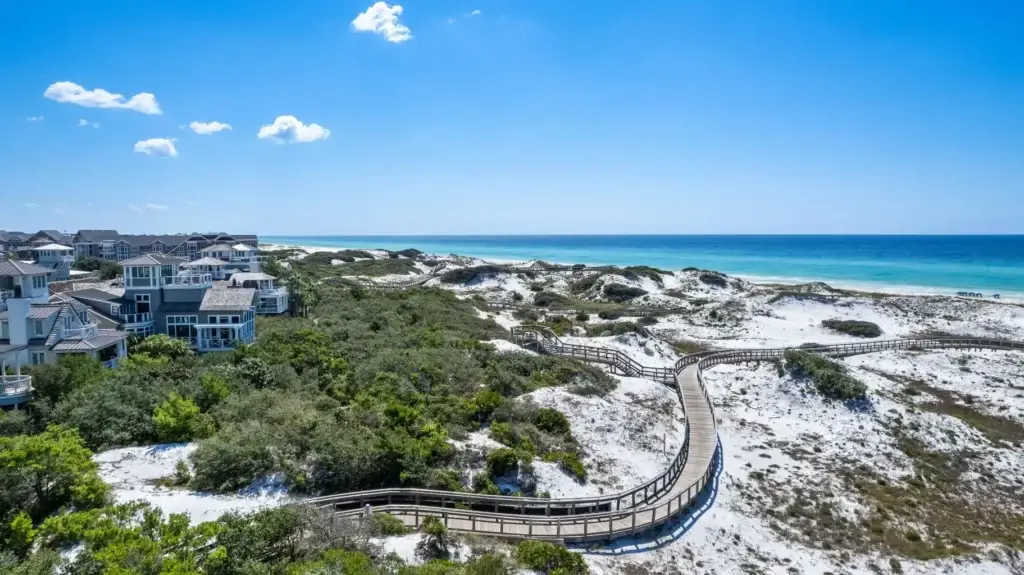
The Private Enclave: Watersound Beach is the answer to a question some buyers eventually ask: “Is there anything on 30A that feels genuinely private?” It is gated, exclusively residential, and built by the St. Joe Company with the explicit intention of creating a community that never feels like a resort — even though the amenity package rivals one. There is no commercial development inside Watersound Beach. No shops. No foot traffic from non-residents. This is as close to a private coastal neighborhood as you’ll find on 30A.
The community is organized around naturalistic landscaping, boardwalk access through protected dune habitat, and a design vocabulary that prioritizes the environment over architectural showmanship. It doesn’t announce itself. If Alys Beach is the minimalist statement you make loudly, Watersound Beach is the statement you make by not making one at all.
The St. Joe Watersound Club membership unlocks amenity access — pools, fitness facilities, golf, tennis, and dining privileges at partner locations. That membership comes at a cost that belongs in your total ownership calculation, not as an afterthought. The community also sits adjacent to Camp Creek Lake, one of 30A’s rare coastal dune lakes, which provides kayaking and paddleboarding access.
Rental Potential: Watersound Beach is rental friendly, but has some deed restrictions. Minimum rental periods apply, and the HOA enforces community behavior standards actively. Buyers seeking maximum rental income should understand this before purchasing.
Price Range: Entry price in Watersound Beach starts around $2.5M for smaller homesites and cottage-style homes. Gulf-front and premium lot properties run $3M–$8M. Larger estates on the best lots have transacted above $10M.
Parking: Non-issue by design. The gated, private access structure means parking is managed — a stark contrast to the free-for-all at public access points.
See the full WaterColor vs. Watersound comparison for a deeper breakdown of how these two St. Joe Company communities differ in cost, rules, and lifestyle.
Watersound Camp Creek
The Golf Course Community: Watersound Camp Creek occupies a different category than its sister community, Watersound Beach. Located north of 30A along Watersound Parkway. Camp Creek is organized around the Camp Creek Golf Club, one of the Panhandle’s most respected private golf facilities. This is a community built for a buyer whose identity is as much linked to a tee time as a beach chair.
The architecture trends modern and substantial: large single-family homes on generous lots, with the kind of separation between properties that’s essentially impossible to find south of 30A at equivalent prices. The Watersound Club membership connects Camp Creek residents to amenities across the Watersound brand, including beach access, though beach access here means planning and logistics, not walking out your back gate.
The honest positioning: if beach proximity is your primary driver, Camp Creek isn’t the right community. If golf, privacy, square footage, and quality construction at a better-per-square-foot value than the Gulf-side communities appeal to you, Camp Creek deserves serious attention from buyers who have been priced out of the Gulf-front market but want to stay within the 30A brand umbrella.
Rental Potential: Camp Creek’s HOA restricts short-term rentals. This is a full-time resident and snowbird community by design, not an investor-friendly STR market.
Price Range: Lots in Camp Creek run $800K–$1.5M, depending on lot position. Existing homes range from $4M-$8M depending on location and finishes. New construction opportunities exist in the community at varying price points.
Parking: Non-issue given the suburban, gated community format.
Seacrest Beach
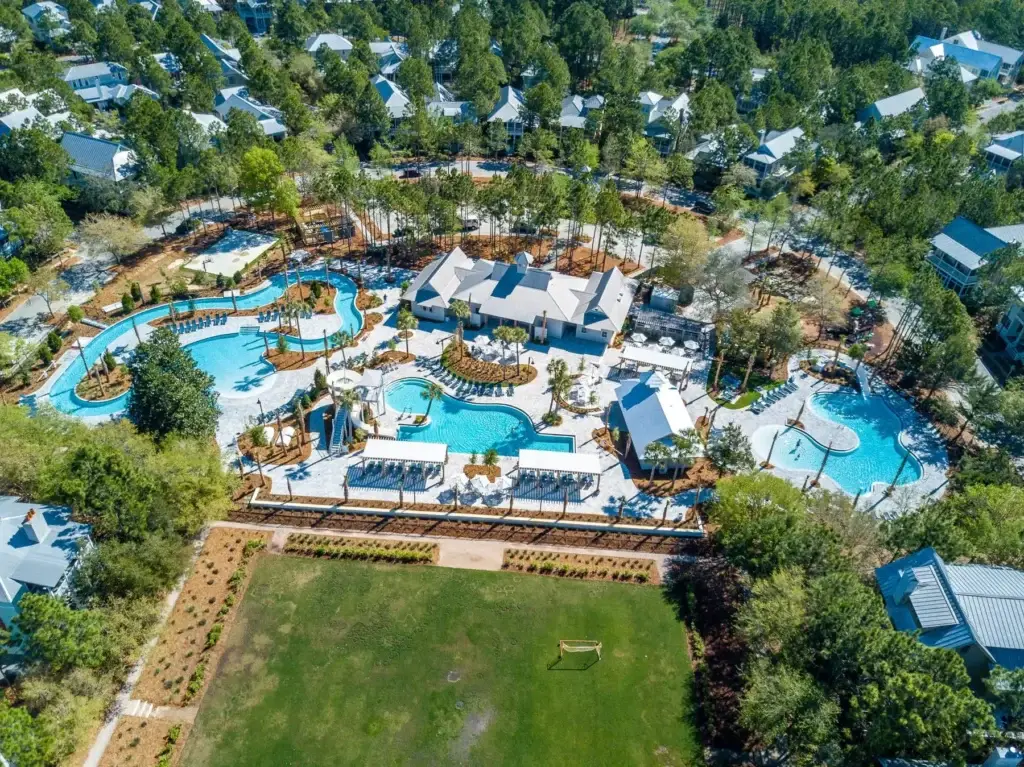
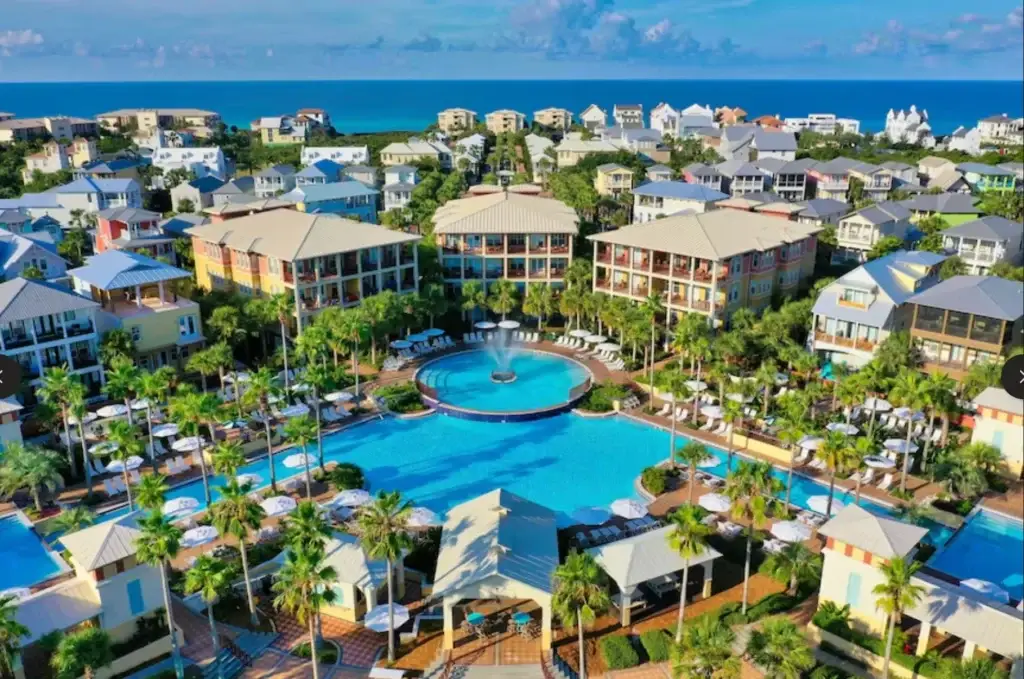
The Lagoon Pool Community: Seacrest Beach punches above its price point on one specific amenity: the 12,000-square-foot Lagoon pool. That pool is a genuine differentiator. Families with young children gravitate toward Seacrest because the lagoon provides a safe, visually dramatic swimming experience that competes with any resort pool on 30A — and it’s available to homeowners and their guests without a per-day fee.
Located on the east end of 30A, Seacrest sits between Alys Beach to the west and Rosemary Beach to the east — premium neighbors that create strong rental demand spillover. The community itself skews toward townhomes and cottage-style single-family homes, which creates a denser, more urban feel than west-end communities. You’re not getting the privacy of Watersound Beach or the elbow room of Blue Mountain — but you’re within easy biking distance of Rosemary Beach’s restaurants and Alys Beach.
Rental Potential: Seacrest allows short-term rentals under Walton County STR regulations. The lagoon access and east end location make it a competitive rental community, and investors know it. Expect neighbors who actively rent their properties.
Price Range: Seacrest is one of the east end’s relative value plays. Condos and smaller townhomes start around $450K–$550K — the most accessible entry point in the east end’s premium zone. Larger townhomes run $600K–$1M. Single-family homes, reach $1.2M–$2.5M.
Parking: East end summer parking chaos applies here, though Seacrest’s internal community parking is generally adequate for residents. The beach access situation mirrors the broader east end: arrive early or use the golf cart.
Alys Beach
Explore the ultimate guide to living in Alys Beach.
30A’s Peak Luxury Community: Alys Beach is 30A’s most architecturally polarizing community. Inspired by Bermudian architecture, every structure is stark white with crisp geometric lines and courtyards hidden behind privacy walls. You either find it breathtakingly elegant or sterile.
The Reality Check: Alys Beach’s architectural standards are the most restrictive on 30A. You cannot deviate from the white palette. Period. Even interior paint colors have guidelines. The Caliza pool and amphitheater are stunning, but the community actively cultivates an exclusive, adults-preferred atmosphere. This isn’t where you bring spring breakers.
Rental Potential: Alys allows STRs but enforces strict guest conduct rules and noise ordinances. While rentals are allowed, they are indirectly discouraged by the fact that you must utilize Alys Beach Management at a whopping fee of 40% (double the normal management fee on 30A). Alys Beach isn’t your play if you’re looking to make money with a rental.
Price Range: Alys is one of 30A’s most expensive communities. Entry-level condos start at just under $3M. Courtyard homes run $3M–$6M. Gulf-front estates command $8M–$20M+.
Parking: Less chaotic than other East 30A communities due to lower density, but the Caliza pool area maxes out quickly on weekends.
Rosemary Beach vs. Alys Beach: the full comparison
Watersound Origins
The Full-Timer’s Sweet Spot: Watersound Origins doesn’t get talked about in the same breath as Rosemary Beach or Alys Beach, and that’s precisely why it has a devoted following among full-time residents and repeat snowbirds who prioritize livability over prestige. Located north of Highway 98, Origins is St. Joe’s more accessible entry point into the Watersound brand — delivering a meaningful amenity package at a price point that won’t require a second mortgage.
The community is built around a town center with a resort-style pool, fitness facility, and walking trails. Lake Powell is also accessible for paddleboarding and kayaking as a real unique lifestyle asset. The architecture is new construction-dominant, with consistent standards that create visual cohesion without the rigidity of Alys Beach’s code. Neighbors here are often families choosing Origins as their primary residence or second home — not short-term rental investors.
Rental Potential: Origins has some of the most restrictive STR policies in the 30A ecosystem. Short-term rental restrictions are built into the community’s DNA. If your ownership model depends on rental income, Origins is the wrong purchase. If you want a neighborhood that feels like a neighborhood — not a rotating cast of vacation guests — Origins delivers that rare commodity on 30A.
Price Range: Origins represents 30A’s most accessible entry point into a master-planned community with serious amenities. Townhomes and smaller single-family homes start around $500K–$600K. Larger homes on premium lots run $700K–$2M. It’s not cheap, but relative to the corridor, the value-per-square-foot ratio is favorable.
Parking: Non-issue. The community’s internal structure handles resident parking without the street-level chaos of coastal 30A.
Grayton Beach
Learn all about what it’s really like to live in Grayton Beach.
The Old Florida Town: Grayton Beach is 30A’s soul. Founded in the 1890s, it’s the oldest community on the strip and fiercely protective of its character. Grayton Beach State Park anchors the western end with 2,000 acres of protected coastline and one of the country’s top-rated beaches.
The Reality Check: Grayton has no unified architectural standards, which is precisely the point. You’ll find beach shacks next to $6M modern compounds. The Red Bar—a local dive with walls covered in found art and Christmas lights year-round—represents Grayton’s ethos: authentic, funky, and indifferent to trends.
Rental Potential: Grayton’s historic section allows STRs with few restrictions, though county regulations still apply. However, be aware that older cottages may not meet current rental licensing requirements without upgrades.
Price Range: Homes north of 30A start in the low $1M range, while gulf-front compounds in the historic community can climb as high as $15M+.
Parking: Western Lake access and the state park create summer parking nightmares. Arrive before 9 AM or after 4 PM. The county offers a shuttle service with overflow parking nearby which is the best option for most visitors.
Read the Seagrove vs. Grayton Beach comparison
Local Tip: Grayton’s “fish camp” cottages are protected historic structures. You can renovate the interior, but exterior changes require approval from the county historical review board.
Dune Allen Beach
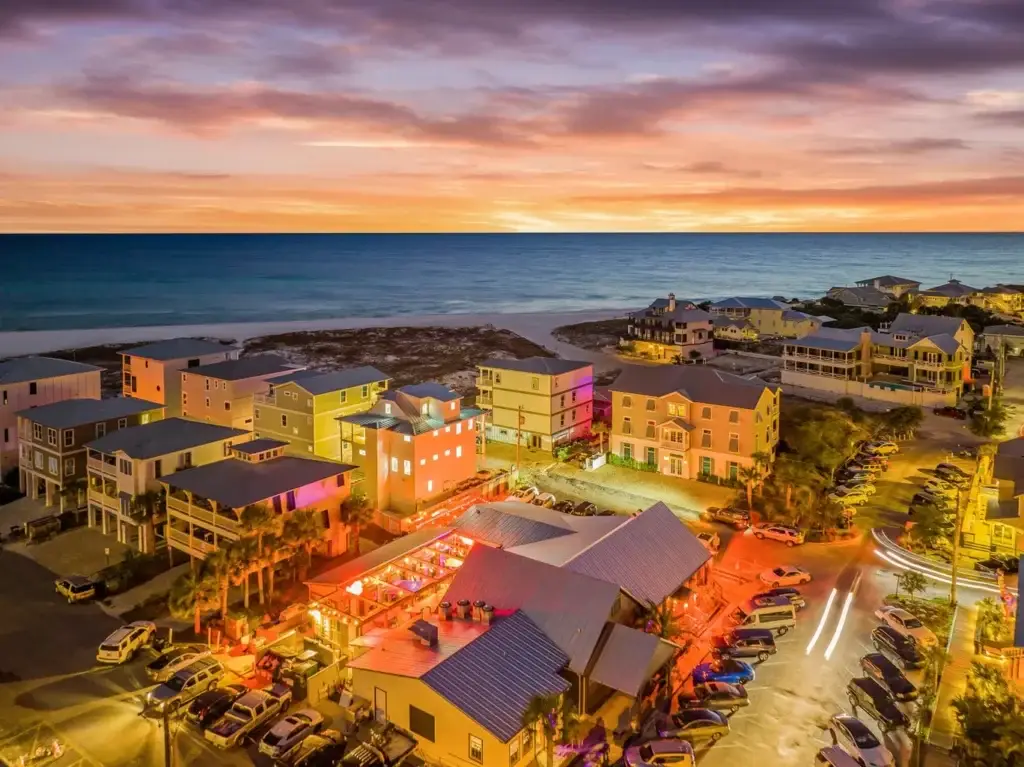
The Quiet Western End of 30A: Dune Allen doesn’t have a town square or an architectural code that made it onto design blogs. That’s the whole point. Straddling the western edge of the more developed 30A corridor, Dune Allen is what most of 30A looked like before the master-planners arrived — a loose collection of beach cottages, newer custom builds, and long-timer families who have zero interest in becoming the next Rosemary Beach.
Gulf Place, the small commercial cluster at the western entrance of Dune Allen, provides just enough: a restaurant or two, a handful of shops, and the Surfing Deer Market for basics. But you are not walking to dinner in Dune Allen the way you would in Seaside. This community rewards people who came to 30A for the natural environment, not the scene. Ed Walline Regional Beach Access, located nearby, is one of the most accessible public beach entry points on the corridor — a genuine asset for full-time residents who want to avoid the chaos of central 30A.
Rental Potential: Dune Allen falls under Walton County STR regulations rather than community-level HOA rules, which means rentals are permitted with county licensing. While there are individual neighborhoods in Dune Allen that have and HOA, there’s no governing HOA for the entirety of Dune Allen.
Price Range: Entry-level beach cottages start around $700K–$900K for non-Gulf-view properties. Gulf-view homes run $1.5M–$3M. True Gulf-front lots command $3M–$5M+, though you’re paying mostly for the land value in an older cottage scenario.
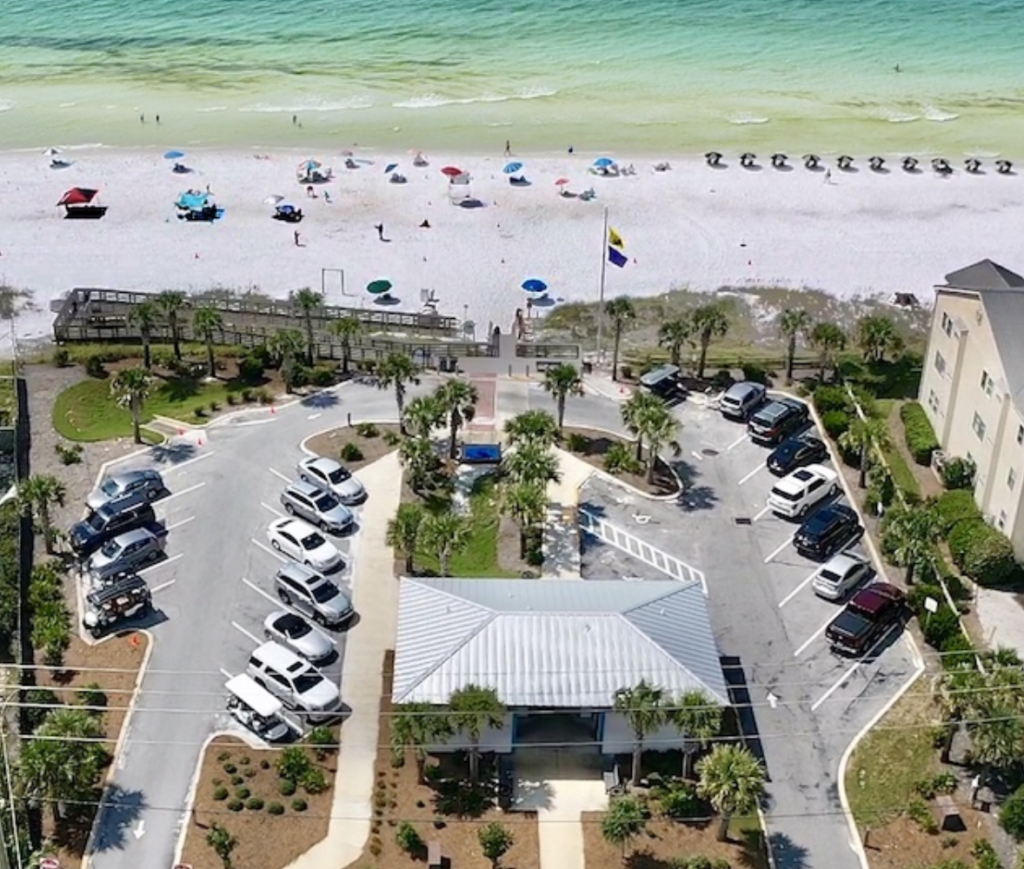
Parking: Better than central 30A, but the Ed Walline Regional Beach Access fills on summer weekends by mid-morning. The county has improved access somewhat, but during peak season, arrive early or accept the walk.
Blue Mountain Beach
30A’s Highest Point: Blue Mountain Beach sits at 65 feet above sea level — the highest coastal elevation in Florida. That’s not hyperbole, and it’s not irrelevant. The dune geography here creates Gulf views from a vantage point you simply cannot buy in flatter communities, and the tree coverage is denser than anywhere on the corridor. Blue Mountain Beach feels like a different climate than the exposed beachfronts to the east.
There is no town center. No roundabout with boutiques and ice cream. What Blue Mountain does have is a tightly knit community of people who chose it precisely because the Seaside crowd didn’t come here. The Blue Mountain Beach Creamery has cult status among locals — parking there on a summer evening tells you everything about how this neighborhood feels compared to the east end.
The new construction here leans heavily into the elevated topography, with multi-story homes designed around Gulf views rather than street-level interaction. It creates a visually interesting mix of older cottages below the ridge line and modern glass-and-wood structures perched above it.
Rental Potential: County STR regulations apply. Most Blue Mountain properties allow vacation rentals, and the elevation and privacy make them appealing to the guest demographic that finds Rosemary Beach too crowded. No community-level HOA restrictions to navigate.
Price Range: This is one of 30A’s better-kept values. Non-Gulf-view homes run $700K–$1.4M. Gulf-view properties (not Gulf-front) start around $1.2M and can reach $3M for newer custom builds with significant view corridors. Gulf-front lots, where they exist, command $3M–$5M+.
Parking: Better than central 30A but still constrained in summer. The Gulfview Heights regional access is the primary beach entry — arrive before 10 AM or after 4 PM on weekends.
Local Tip: The western section of Grayton Beach State Park borders Blue Mountain Beach directly. State park beach is accessible to neighbors without the crowds of the main park entrance — a significant quality-of-life advantage most buyers don’t know to ask about.
Seagrove Beach
The Original 30A: If Grayton Beach is 30A’s soul, Seagrove Beach is its heart. Developed in the 1940s and 1950s, Seagrove predates New Urbanism, master planning, and the entire architecture that defines what most people imagine when they say “30A.” The original subdivisions here — platted in modest beach cottage increments — created a density and variety you won’t find in the more controlled communities to the east.
Seagrove sits at the geographic and psychological midpoint of 30A, adjacent to WaterColor and Seaside on its western border and stretching toward Eastern Lake and Watersound Beach to the east. It has the arguably enviable position of being walkable-ish to some of 30A’s most desirable “hot spots.” The Seagrove Village Market, a landmark corner store with a loyal following, anchors the community in a way no resort pool ever could.
The reality check here is that Seagrove’s “freedom from HOA” cuts both ways. Architectural variety is genuine — you’ll find 1960s beach cottages, renovated bungalows, and brand-new modern builds within a few blocks of each other. But there’s no architectural review process ensuring your neighbor doesn’t install something you’d rather not see. You get the authenticity with the uncertainty.
Rental Potential: County STR licensing governs rentals. Seagrove has some of the most active vacation rental inventory on the corridor, given its central location and relative affordability compared to Rosemary or Alys. Investors pay attention to this area specifically because the price-to-rental-income ratio can be more favorable than the marquee-name communities.
Price Range: Seagrove offers 30A’s most compressed price range. Older cottages start around $600K–$900K. Renovated homes with good locations run $1M–$2M. Newer custom builds and Gulf-view properties reach $2M–$4M. Gulf-front properties are rare and command $4M–$7M+.
Parking Reality: Seagrove regional access is a genuine bottleneck in summer. The proximity to both WaterColor and Seaside’s beach crowds compounds the problem. Plan accordingly.
Check out our full comparison of Seagrove vs. Grayton Beach if you’re weighing the older-school west end communities.
Inlet Beach
The Eastern End: Inlet Beach technically marks the eastern end of 30A, though its identity is complicated. It straddles the border between Walton and Bay Counties, which creates tax and governance quirks buyers must understand.
The Reality Check: Inlet Beach is 30A’s most affordable entry point, with condos starting in the high $300Ks and smaller homes around $600K–$800K. However, “affordable” here is relative—you’re trading location prestige for value. The area lacks the walkable town center charm of Rosemary or WaterColor, and you’ll drive to restaurants and shopping.
Rental Potential: More lenient than the ultra-restrictive western communities, but check your specific HOA. Some newer developments have minimum stay requirements.
Price Range: Condos: $350K–$700K. Single-family homes: $600K–$2.5M. Gulf-front properties: $2M–$5M+.
Parking: Better than central 30A due to lower density and newer infrastructure, but the summer beach crowds still overwhelm Inlet Beach’s public access points.
Toured all 13 communities and still not sure where you fit?
I’m here to help and answer your questions.
The Unwritten Rules of Living on 30A
Traffic & Seasonality: Beyond “Summer is Busy”
Spring Break (March): This is 30A’s most chaotic period. College students descend on the corridor, particularly around the public beach access points. Locals flee. Traffic is at its absolute worst, restaurant waits stretch to two hours, and good luck finding a parking spot anywhere between 10 AM and 6 PM.
Summer (June–August): Peak rental season. Saturdays are unbearable—this is turnover day when one week’s renters check out and new arrivals check in. Highway 98 and 30A become parking lots between 10 AM and 2 PM. Locals know: don’t run errands on Saturday. Schedule appointments on Tuesdays or Wednesdays.
October: Festival season brings a different crowd. The 30A Songwriters Festival and Seeing Red Wine Festival pack the corridor with affluent, culturally engaged tourists. Hotels book out, but the vibe is more civilized than spring break’s chaos.
Dead Winter (January–February): 30A becomes a ghost town—which means construction crews descend. If you’re living here year-round, expect noise from tear-downs, renovations, and new builds throughout the quiet months. Many restaurants close or reduce hours. Some love this solitude; others find it eerie.
Read our seasonal guide to visiting 30A
Local Tip: Shop at Publix on 98 on weekday mornings, never on Saturday. For serious grocery runs, drive to Target or Walmart in Miramar Beach or Panama City Beach—you’ll save significantly on resort-inflated prices.
Beach Access Truths: The Myth of “Walk Anywhere”
Here’s what the tourism sites won’t tell you: Florida’s beach access laws are complicated, contentious, and actively litigated.
Deeded Access vs. Public Access: If you own property south of 30A, your deed likely includes private beach access via a designated walkaround or neighborhood path. This is valuable—protect it. Properties north of 30A or without deeded access must use public regional access points, which are overcrowded and require parking (good luck in summer).
The Customary Use Battle: Florida’s beaches below the mean high-water line are technically public, but private property owners along the beach have fought to restrict “customary use” of the dry sand above that line. This legal battle has created awkward situations where you’re technically allowed on the wet sand but not the dry sand in front of certain homes. Enforcement varies, signage is confusing, and tensions run high during peak season.
What This Means for Buyers: If beach access matters to you—and if you’re buying on 30A, it should—verify your property’s specific access rights. “Close to the beach” means nothing if you’re hiking a mile to public access or fighting for parking.
Read our complete guide to 30A beach access rules.
Beach access rights are the most misunderstood issue in 30A real estate.
Let’s make sure you’re asking the right questions before you make an offer.
The Highway 98 Reality
Here’s the unsexy truth about 30A living: For schools, hospitals, serious grocery shopping, big-box stores, and any services beyond boutiques and beach cafes, you’re driving north to Highway 98. And Highway 98 is a mess.
This four-lane corridor through South Walton County handles through-traffic between Destin and Panama City Beach, plus all the support traffic for 30A’s coastal communities. During tourist season, the stoplights create rolling backups. A trip from Rosemary Beach to Sacred Heart Hospital on the Bay (near Miramar Beach) can take 45 minutes during summer weekends—a distance of only 12 miles.
Schools: South Walton County schools serve 30A, which means bus rides or carpool lines along 98. The closest high school, South Walton High, sits on 98 in Santa Rosa Beach.
Healthcare: No hospitals exist directly on 30A. Sacred Heart on the Bay and HCA Fort Walton Beach are the primary options, both requiring 98 access.
Real Grocery Stores: Yes, Seaside and WaterColor have markets. They’re also priced like resort gift shops. For normal grocery bills, you’re driving to Publix, Winn-Dixie, or Walmart along 98.
Read our full 30A relocation guide
The Financial & Logistical Cons Nobody Mentions
Insurance & Weather Reality
Let’s talk about what that Gulf-front dream costs beyond the purchase price.
Flood Insurance: Properties south of 30A often sit in Special Flood Hazard Areas (SFHA), requiring flood insurance if you have a mortgage. Premiums vary wildly based on elevation and flood zone designation, but $2K–$5K annually is common. Gulf-front properties in high-risk zones can face $10K+ annual premiums.
Windstorm/Hurricane Coverage: Florida’s wind and hail deductibles are percentage-based, not flat dollar amounts. A 2% hurricane deductible on a $2M home means you’re paying the first $40K of hurricane damage out of pocket. Some policies now carry 5% deductibles. This isn’t theoretical—30A took direct hits from Hurricane Michael (2018) and multiple storm systems since.
The South vs. North Premium: Properties south of 30A pay measurably higher insurance rates than properties north of 98. That price difference compounds annually.
Read what it’s really like living on 30A full-time.
Construction Fatigue: The Tear-Down Economy
30A is in constant transformation, and that means noise, dust, and views that disappear overnight.
The tear-down trend accelerated post-2020. Older beach cottages on premium lots get demolished and replaced with 4,000+ square-foot “coastal modern” houses that maximize every inch of allowable building envelope. Your charming 1990s beach bungalow with Gulf views might suddenly neighbor a three-story box that blocks your sunset.
Construction noise runs year-round but peaks in winter. Foundation work, framing, and exterior construction happen early morning to beat the heat—which means 7 AM starts. If you’re living full-time on 30A, accept that you’ll hear skill saws and backup alarms regularly.
Cost of Living: The Resort Tax
It’s not just the home price—it’s the daily cost of existing in a resort economy.
Groceries: A gallon of milk that costs $3.50 at Publix on 98 might be $5.50 at Seaside’s market. Restaurants on 30A charge premium prices; a casual lunch for two easily hits $60–$80 before drinks.
Services: Plumbers, electricians, landscapers, and contractors all charge “30A rates.” Expect to pay 20–40% more than comparable services in nearby Panama City or Fort Walton Beach.
HOA Fees: Master-planned communities charge serious HOA fees. WaterColor and Alys Beach HOAs can run $500–$1,200+ monthly, covering amenity access, landscaping, and property management. These fees increase annually.
Property Taxes: Walton County’s millage rate isn’t exorbitant compared to other Florida counties, but when you’re taxed on a $2M–$5M property, the bills add up. Budget $15K–$40K+ annually depending on your assessed value and homestead exemption status. Learn more by visiting the Walton County Tax Collector Website.
The Forgotten 30A: North of the Bay
While everyone obsesses over Gulf-front real estate, savvy locals have discovered Point Washington and Freeport—communities north of Choctawhatchee Bay that technically fall within the 30A lifestyle corridor but at dramatically different price points.
Point Washington: This unincorporated area between the bay and US-98 offers something rare on 30A: space. Properties here often include acreage, boat docks on the bay, and proximity to Eden Gardens State Park—a stunning 19th-century mansion and gardens that tourists somehow miss.
Why Locals Are Moving Here:
- Price: $400K–$800K buys a substantial single-family home with land, versus a condo or teardown lot south of 30A.
- Bay Access: Deep-water boat docks beat fighting for beach parking. Fish, kayak, paddleboard, or cruise to Destin without the Gulf’s rougher waters.
- Escaping the Tourist Crush: You’re 10 minutes from 30A but buffered from the chaos.
- Room to Breathe: Fewer deed restrictions, more privacy, actual yards.
The Trade-Offs: You’re not walking to the beach. You’re driving to 30A for dining and entertainment. You’re explaining to out-of-town friends that, no, you can’t see the Gulf from your house. But for many year-round residents and retirees who value peace over proximity, this trade-off makes perfect sense.
Read about the real differences between south and north of 30A
Final Thoughts: Is 30A Right for You?
30A isn’t a single place—it’s a 24-mile spectrum of communities, price points, and lifestyle choices. The honest answer to “Should I buy on 30A?” depends entirely on what you’re willing to compromise.
You’ll thrive here if:
- You value access to natural beauty and accept the trade-off of crowds and cost
- You can afford not just the purchase price but the ongoing insurance, taxes, and maintenance
- You embrace either the structured resort aesthetic of the East End or the eclectic freedom of the West End—but know which one fits your personality
- You’re realistic about seasonality and traffic, planning your life around tourist cycles
- You view your property as a long-term investment in lifestyle, not just appreciation
You’ll struggle here if:
- You need affordability, space, or freedom from HOA restrictions
- You expect year-round tranquility or hate crowds
- You’re sensitive to construction noise and constant development
- You require immediate access to hospitals, schools, or big-box shopping
- You want a “beach house” experience without the insurance, maintenance, and logistical reality
The magic of 30A is real—the rare coastal dune lakes, the sugar-white sand, the communities built with intention and care. But magic costs money, requires patience, and demands acceptance of trade-offs. The question isn’t whether 30A is beautiful. It’s whether you’re ready for the reality behind the Instagram photos.
🏖️ Thinking of Making the Move to 30A?
Navigating the “East vs. West” divide or the Highway 98 crossover is much easier with a local expert by your side. Whether you’re hunting for a legacy beachfront estate or a smart rental investment, let’s talk strategy. Use the button below to schedule a quick 7-minute Discovery Call with me!
OR
Call/Text Me: 850-585-0642
Email: andy@livingon30aflorida.com
30A Real Estate: Frequently Asked Questions
1. Where is 30A Florida located?
County Road 30A is a 24-mile scenic corridor along Florida’s Emerald Coast in South Walton County, located south of US-98 between Destin and Panama City Beach. It is characterized by rare coastal dune lakes and distinctive beach communities ranging from resort-style towns to laid-back enclaves.
2. What is the difference between East 30A and West 30A?
East 30A (Inlet Beach, Rosemary Beach, Alys Beach, WaterColor) is known for manicured, New Urbanist master-planned communities with strict HOAs, walkability, and high density. West 30A (Grayton Beach, Blue Mountain, Dune Allen) offers an ‘Old Florida’ vibe with fewer restrictions, eclectic architecture, more privacy, and a mix of historic cottages and modern homes.
3. What are the downsides of living on 30A?
The main downsides include severe traffic congestion on the two-lane road during summer and spring break, high costs of living (including ‘resort pricing’ for groceries and services), frequent construction noise from tear-downs, and the need to drive north to Highway 98 for schools, hospitals, and major shopping.
4. What is the most affordable community on 30A?
Inlet Beach and Seacrest Beach offer the lowest entry prices on the east end, with condos starting in the mid-$300Ks to low $400Ks. On the west end, Seagrove Beach and Blue Mountain Beach offer older cottages starting around $600K–$900K. Watersound Origins is the most affordable master-planned community with amenities, with townhomes starting around $500K–$600K.
5. Which 30A communities are best for full-time residents rather than investors?
Watersound Origins and Watersound Camp Creek are built explicitly for full-timers and snowbirds, with HOA rules that actively restrict short-term rentals. Grayton Beach, Blue Mountain Beach, and Dune Allen also have higher percentages of year-round residents and a community culture that predates the vacation rental economy.
This guide is intended as an educational overview based on general knowledge of the 30A corridor as of early 2026. Real estate markets, HOA rules, rental regulations, and insurance requirements change frequently. Always consult with licensed real estate professionals, insurance agents, and legal advisors before making purchase decisions.

Fantastic article. Well done. Makes me want to call you when we finally start looking for real and not just online:)
Mary, that means a lot — thank you!
And I totally get the “just looking online” phase. When you start getting serious, I’d be happy to help you narrow things down and make a smart game plan. Out of curiosity, what area of 30A do you find yourself looking at the most?
Pingback: Getting to 30A: Closest Airports (ECP vs VPS) & Driving Routes
Pingback: South of 30A vs. North of 30A: Real Costs, Value & Data (2026)
Pingback: 30A Beach Access: Public vs. Private Rules (2026 Guide)
Pingback: Living in Seaside, FL: The True Cost of New Urbanism
Pingback: Living in WaterColor FL: The Real Cost, Rules & Districts (2025)
Pingback: Living in Rosemary Beach: Design Code, Costs & HOA Rules
Pingback: Living in Alys Beach FL: The Ultimate Luxury Guide (2026 Costs & Rules)
Pingback: Living in Grayton Beach, FL: Costs, Pros & The “Strange” Truth
Pingback: Seaside vs. WaterColor: Which 30A Town is Best for Families?
Pingback: WaterColor vs Watersound Beach: Cost, Rules & Honest Comparison (2026)
Pingback: Rosemary Beach vs. Alys Beach: The Honest 2026 Comparison (Cost, Vibe & ROI)
Pingback: Moving to 30A: Relocation Guide (Schools, Internet & Utilities)
Pingback: Living on 30A Full-Time: Locals' Guide to Costs & Realities